

The second line of defense: Women shaping Ukraine's recovery in defense, telecom, and agriculture
2026-06-17
Three women leaders reveal how Ukraine’s defense, telecom, and agricultural sectors are not only recovering from war but creating new models of resilience and innovation.
When the world talks about Ukraine's recovery, it usually talks in numbers: billions in aid, kilometers of damaged infrastructure, percentages of GDP. What gets lost in those numbers is who is actually doing the work.
In this June issue of Insights, we look at three sectors holding Ukraine's present and building its future: defense, telecommunications, and agriculture. The content of this issue is a contribution from our members, who share their positions on what has already been achieved, what stands in the way, and where Ukraine is no longer catching up to global standards but setting them.
They are honest accounts from people making decisions under pressure that most of their international peers have never faced.
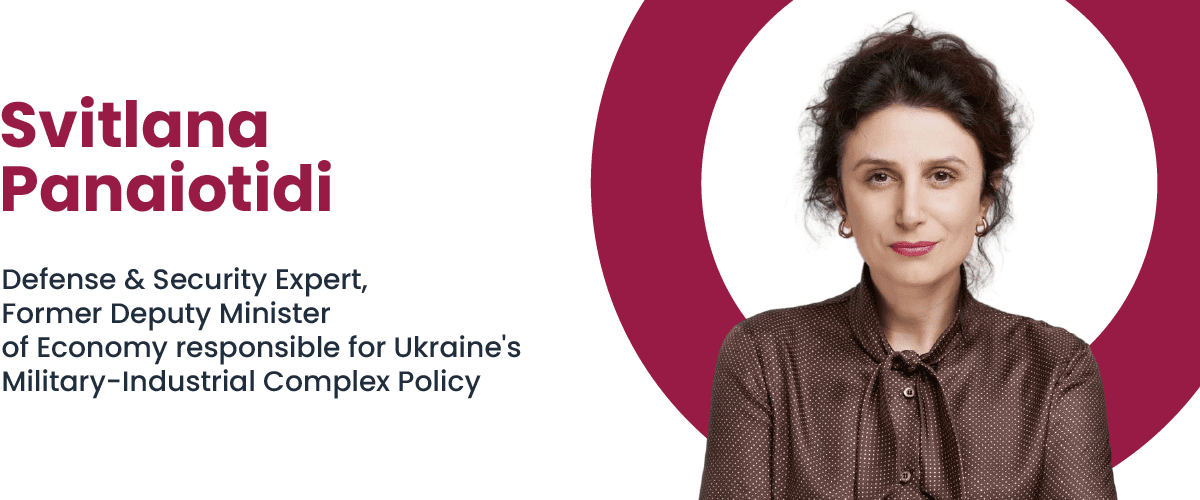
- Svitlana Panaiotidi on a defense innovation ecosystem built from scratch in four years.
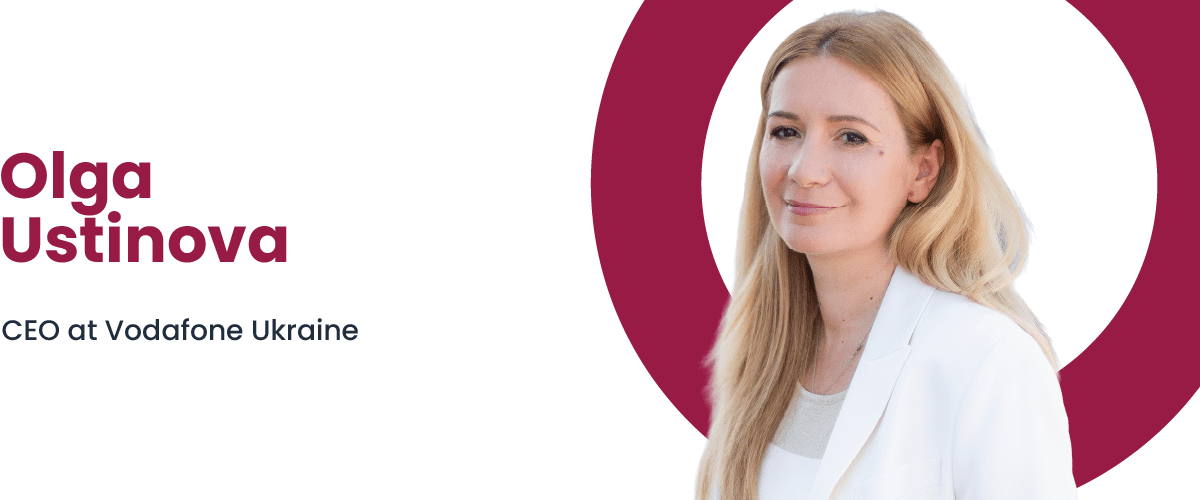
- Olga Ustinova on keeping a country connected through blackouts and strikes.
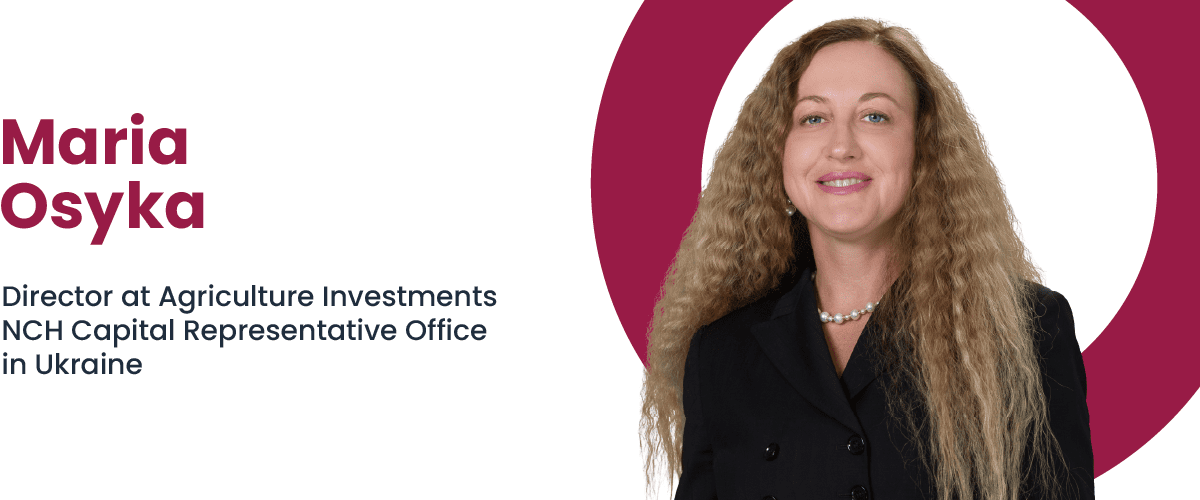
- Maria Osyka on an agricultural sector that holds the second line of defense.
Their answers below speak for themselves.
1. What has already been achieved in your sector during the war and recovery period?
In four years of full-scale war, Ukraine has built what I would call the world's most advanced military innovation ecosystem. We went from assembling the first kamikaze drones from household motors and 3D-printed parts to producing over 4 million drones in 2025, with a target of 7 million in 2026. We have developed credible long-range strike capabilities - Deep Strike systems reaching over 1,200 km hitting Russian oil refineries, strategic airbases and ammunition depots deep inside Russian territory, systematically degrading the enemy's logistics and fuel supply chain.
The ecosystem behind this (over 500 private producers, competing, iterating, supplying the front at speed) did not emerge by accident. It emerged because the market was open and competitive. The war proved that was the right architecture. This is a fundamental shift in Ukraine's position. We are no longer just a recipient of security assistance. We are a provider of it.
2. What are the biggest challenges your industry is facing today?
I will be direct, because I think the defense sector deserves honest conversation, not just celebration. Our first challenge is component dependency. We do not produce our own microelectronics, optical fiber, or key radio modules at industrial scale. This is not unique to Ukraine. No country in the world produces weapons in a truly full cycle. But our dependency is more acute, and a disrupted supply chain is an existential vulnerability in wartime.
Our second challenge is governance and transparency. To access international partners: investors, foreign governments, NATO procurement, our companies need more than battlefield results. They need auditable financials, compliance frameworks and corporate governance that partners recognize and trust. Some of our most successful producers are still essentially operating as wartime startups. That was appropriate in 2022. It is a liability in 2026.
Our third challenge is the tension between supplying the front and building an export market. These are not natural enemies, in fact, scale drives down unit cost, which benefits both. But managing that balance requires policy decisions that we have not yet fully made.
And the fourth, perhaps the most strategically significant, is the risk of technology transfer without control. Here I want to make an important distinction that is often lost in public debate. The basic frame of an FPV drone is replicable. But what is inside is a different story entirely. Algorithms for autonomous targeting under active electronic warfare, AI recognition systems trained on years of real combat data, software for coordinated swarm attacks, protocols for bypassing specific jamming frequencies - none of this copies quickly. The best evidence is our own market: over 500 producers exist precisely because the software, algorithms and accumulated experience create real differentiation.
3. Where do you see Ukraine already creating new approaches or becoming an example for others?
Three areas where Ukraine has genuinely rewritten the rules.
First: the economics of precision strike. When a Ukrainian drone costing tens of thousands of dollars destroys a target for which Western defense industry offers a missile costing one to two million - that breaks the existing business model of high-end weapons markets. A Tomahawk requires a political decision at the level of the White House, legal clearance, a naval or air platform, and allied coordination. Our strike drone requires a commander's decision, a field, and a target. This is not just a price difference. It is a difference in decision-making speed and political independence. That asymmetry is what makes us an uncomfortable player for established arms exporters.
Second: the speed of battlefield iteration. We update drone designs in weeks in response to new jamming frequencies. Large defense corporations do this in years, through certification cycles and corporate bureaucracy. We are MilTestLab. That gap between battle-tested and laboratory-tested is not a technical detail. It is the entire argument.
Third: and this is where I see the most profound shift - Ukraine is now actively transferring this knowledge to others, not as a donor receiving gratitude, but as an expert commanding respect.
Ukrainian expert teams are on the ground across the Middle East and Gulf region, assessing defense systems, advising governments, and securing long-term military cooperation agreements including training programs and potential drone sales. The Hormuz crisis made this expertise immediately relevant. The vulnerability of traditional naval forces to unmanned system attacks in the Strait of Hormuz directly mirrors the challenges Ukraine faced in the Black Sea. Ukraine's experience using unmanned surface vessels to neutralize the adversary's advantage at sea offers a replicable model for countering asymmetric threats in any maritime environment.
The same pattern repeated in Europe. In May 2026, Ukrainian drone operators were invited to train NATO forces at Gotland exercises in Sweden. They played the aggressor. They stopped the exercise three times. A 24-year-old Ukrainian pilot told Western commanders: in real life, you would have been dead. That is not an anecdote. That is doctrine being rewritten in real time by us. A country that is not yet a NATO member was invited to teach NATO how to survive modern warfare on NATO soil.
This is what "becoming an example" actually looks like. Not in conference rooms. On training grounds. Under conditions as close to real war as peacetime allows.
We did not enter the top league through the front door. We came through the window. The question now is whether we can convert battlefield recognition into a permanent seat at the table, not just as teachers at someone else's exercises, but as equal partners in shaping the new doctrine of European security.
1. What has already been achieved in your sector during the war and recovery period?
In telecommunications, our main achievement is very simple to describe – and extremely difficult to deliver: we have kept Ukraine connected under conditions that were never meant to be “normal” for any modern economy.
Over these years, connectivity has become much more than a service. It has become part of the country’s critical resilience – essential for emergency response, public services, business continuity, education, healthcare, and for millions of personal decisions people make every day in wartime.
What matters most to me is not only that networks continued to operate, but that we learned how to operate under extreme pressure. We have worked through destruction of infrastructure, prolonged blackouts, cyber threats, and constant uncertainty. At the same time, we continued investing, rebuilding, and strengthening the network. This experience has fundamentally changed how we think. Before the war, efficiency and growth were the key priorities. Today, resilience is the priority. It is about making sure the system works not only in stable conditions, but under continuous stress.
There is also a very important human dimension behind this. Every stable connection is the result of people working in very difficult circumstances – engineers restoring sites after shelling, teams operating during blackouts, colleagues supporting each other through long and demanding periods.
In moments like these, leadership also changes. It becomes less about hierarchy and more about responsibility, clarity, and the ability to keep people focused and supported. And I think many women leaders in Ukraine have naturally stepped into this kind of leadership – calm, consistent, and very people-centered.
If I had to summarize what we have achieved, I would say this: we did not simply keep communication running – we helped the country continue to function.
2. What are the biggest challenges your industry is facing today?
The biggest challenge is that telecommunications in Ukraine is no longer operating in a conventional environment. It has effectively become part of critical infrastructure operating under constant pressure.
We are working in conditions where infrastructure can be damaged repeatedly, where long power outages can happen, and where cybersecurity threats are continuous. At the same time, demand for connectivity is only increasing.
This creates a very specific situation: we are not only restoring what is damaged, but we must simultaneously build for the future. Every investment decision must answer two questions at once – does it help us operate today, and does it make us stronger tomorrow? Energy resilience is one of the most critical challenges. Maintaining network operations during prolonged blackouts requires large-scale investment in backup power, redundancy, and operational flexibility.
Another important challenge is human sustainability. We often focus on technology, but resilience depends on people. Engineers, technical teams, cybersecurity specialists – all of them have been working under pressure for a long time. Fatigue becomes a real factor, and as leaders we must take that seriously.
Despite all challenges, expectations remain very clear: communication must always work. And this expectation is absolutely justified. Today, connectivity is essential for safety, for economic life, and for everyday functioning of society.
So our challenge is not only technical. It is about building systems – and teams – that remain reliable over a long period of uncertainty.
3. Where do you see Ukraine already creating new approaches or becoming an example for others?
For many years, Ukraine measured itself against international standards. If something met the highest global benchmark, that was seen as the goal.
But the experience of full-scale war has changed this paradigm. Today, we see that new standards are being formed here.
In telecommunications and other critical sectors, these standards are very practical. First, resilience by design. Systems are built not for stable conditions, but to function under repeated disruption.
Second, continuity under crisis. Communication, energy, public services – all are expected to operate even during blackouts, attacks, and displacement.
Third, the integration of physical and cyber security. We no longer separate them – digital infrastructure is part of the overall security environment.
And finally, speed of recovery. The ability to restore and rebuild quickly is no longer an advantage – it is a necessity.
What is important is that this is not theoretical. It is based on real experience. Ukraine has had to deal with the most complex scenarios – destruction of infrastructure, mass displacement, long blackouts – and continue operating.
I also believe Ukraine is demonstrating a new approach to leadership. In extreme conditions, leadership becomes more grounded, more collaborative, and more human. Many women across business and society are playing a key role in this – not as a formal position, but through everyday responsibility, decision-making, and the ability to support others. Where Ukraine is becoming an example is in showing that resilience is not an abstract concept. It is a practical capability – the ability to keep systems working and people connected when everything around you is under pressure.
And this capability is being built in Ukraine today.
The rebuilding of Ukraine's agribusiness is focused on moving from survival to deep transformation, relocation, and the adoption of innovation. Despite the losses, the sector is showing resilience, drawing on accumulated capital, state-subsidized lending, grants, demining, and the modernization of export logistics.
Key directions of recovery:
- Large-scale demining: Priority clearing of fields in de-occupied territories (Kharkiv, Kherson, Mykolaiv, Sumy, and Chernihiv regions) to bring farmland back into production.
- Logistics and storage: Expanding the network of elevators and grain storage facilities, purchasing mobile storage systems (polyethylene sleeves) to reduce dependence on traditional export routes, and growing the rail car and machinery fleet.
- Financial support: Access to credit (the "Affordable Loans 5-7-9%" program), war risk insurance, and attracting international investment.
- Value-added processing: Investment in deep processing with a focus on exporting finished products (oil, flour, meat) rather than raw materials alone. State and international grants (the yeRobota programs) are stimulating the development of processing enterprises.
- Digitalization and precision farming: Using drones, artificial intelligence, cloud technologies, and precision seeding and fertilization systems to minimize costs.
- Adapting to climate change: Shifting to more drought-resistant technologies, varieties, and hybrids, and introducing advanced irrigation technologies and soil restoration methods.
The biggest challenges for Ukrainian agribusiness during the war are mined fields and contaminated land, labor shortages caused by mobilization and migration, destroyed logistics and energy infrastructure, export difficulties, and significant direct financial losses.
The sector is structurally rebuilding itself, but faces a set of complex obstacles:
- Mined and occupied territories. Up to 30% of agricultural land in frontline and de-occupied regions requires demining, and a significant share of farmland has been lost to direct occupation.
- Labor shortage. The mobilization of specialists (machine operators, agronomists, engineers) and mass migration have created a workforce deficit, especially among drivers, putting timely sowing and harvesting campaigns at risk.
- Logistics and exports. Destroyed infrastructure, blocked ports, and restrictions on cross-border trade significantly complicate delivery and sales. This raises transportation costs and reduces the profitability of grain production.
- Access to finance. Agricultural producers face a shortage of working capital, high credit risks, and difficulties with crop insurance.
- Energy crisis. Damage to energy infrastructure creates obstacles for storage, processing of agricultural products, and the operation of irrigation systems.
- Tax burden. The minimum tax liability (MTL) and compensation for land used for the construction of defensive fortifications remain unresolved issues.
Innovation in Ukrainian agribusiness is aimed at overcoming climate and wartime challenges, optimizing resources, and advancing European integration. Key directions include precision farming, the use of drones, satellite monitoring, biotechnology, and the shift toward deep processing of raw materials.
Leading innovation sectors and technologies:
- Precision farming and digitalization: Cloud platforms (such as Cropwise) allow agronomists to manage field data, analyze soil conditions, and forecast yields.
- Drones and artificial intelligence (AgroTech): UAVs are used for applying crop protection products, seeding, aerial photography, crop monitoring, and demining agricultural land.
- Deep tech and AI: Startups are applying computer vision algorithms for early detection of plant diseases and optimization of water and fertilizer use.
Overall, Ukraine's agribusiness is demonstrating resilience and holding the second line of defense alongside the Armed Forces.
For decades, recovery meant one thing: returning to how things were, or catching up to how things are done elsewhere. Ukraine has quietly abandoned both definitions.
Defense producers are not rebuilding an old industry, they are running an ecosystem that did not exist four years ago and that NATO now studies.
Networks are not being restored to pre-war specifications, they are being rebuilt around a principle, resilience by design, that most European operators have never had to test.
Farmers are not waiting for the old export routes to reopen, they are investing in deep processing and AI on land that is still being defined.
This is the insight hiding in plain sight across all three speakers: Ukraine is not recovering toward a benchmark. It is becoming one.