

Inside Ukraine's Governance Reform: What Happens When the Framework Meets Reality
2026-05-19
Ukraine has largely completed the legal phase of SOE governance reform. The real challenge now is whether supervisory boards can act independently under pressure.
Ukraine has spent years building one of the most ambitious corporate governance reform programmes in the post-Soviet world. The legal architecture is largely there. But writing the rules and living by them are two very different things, and the gap between them is exactly where reform succeeds or fails.
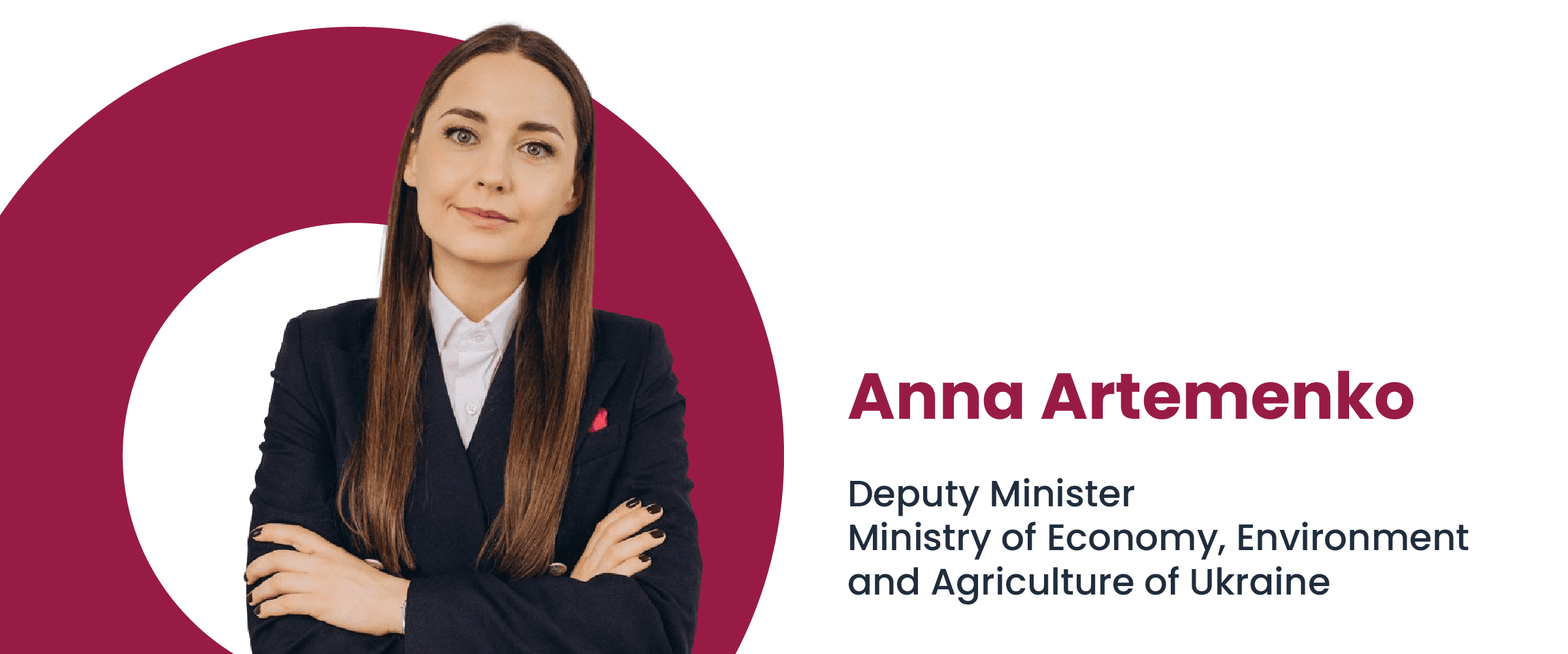
In this issue, we spoke with Anna Artemenko, who breaks down what Ukraine has actually built, where the real obstacles lie, and why the toughest test of any governance system has nothing to do with legislation.
WHY IS UKRAINE'S GOVERNANCE REFORM A USEFUL CASE STUDY, AND HOW SHOULD IT BE UNDERSTOOD?
Corporate governance reform tends to get judged by the laws on the books and the procedures written down. The real test usually comes much later, when the institutions involved actually show that they are willing to use the powers they were given. Ukraine’s reform of corporate governance in state-owned enterprises is a good example of why that distinction matters.
Over the past several years, Ukraine has made meaningful progress in building a corporate governance framework that broadly tracks the OECD Guidelines, wider international expectations, and the day-to-day reality of how Ukrainian institutions operate. The harder part lies elsewhere: making sure that genuinely independent supervisory boards can actually function in practice.
Looked at this way, Ukraine’s governance reform really has two sides: a legislative one and an operational one. A lot has been done on the first. The second is much harder, and it is far from finished.
WHAT HAS UKRAINE ACHIEVED ON THE LEGISLATIVE SIDE, AND WHAT DOES THE OECD SAY ABOUT IT?
Ukraine has built the framework.
In recent years, Ukraine has put in place most of the legal foundations needed for a modern SOE governance regime.
That progress shows up not only in Ukraine’s alignment with the OECD Guidelines on Corporate Governance of State-Owned Enterprises, but also in the findings of the OECD Review 2026. It is worth noting that the Review contains relatively few recommendations aimed at redesigning the legal framework for supervisory boards. Aside from temporary wartime exemptions, the basic architecture is already there.
What the OECD assessment highlights instead is a long list of reforms that have already been carried out, including the adoption of Law No. 3587-IX, the State Ownership Policy, the procedures for evaluating supervisory board effectiveness, and a range of other secondary legislation. Even reforms that were still pending at the end of 2025 have, for the most part, since been completed. Among them are competitive selection procedures for state representatives on supervisory boards and qualification profiles for board composition. Taken together, these measures suggest that the foundational legislative stage of supervisory board reform is now largely behind us.
DOES LEGAL PROGRESS MEAN THE WORK IS DONE?
International experience in SOE governance shows fairly consistently that legal reform tends to move faster than institutional maturity. Drafting procedures is hard. Building a governance culture that actually applies them, and applies them under pressure, is much harder.
WHAT DOES THE NEXT PHASE OF THE FRAMEWORK INCLUDE?
The framework continues to evolve. The next phase includes further reform of the Nomination Committee, the adoption of model governance documents for public sector companies, improvements to the contractual arrangements for supervisory board members, and reforms relating to the accountability of anti-corruption functions (the three lines of defence model).
WHAT IS THE CENTRAL PROBLEM NOW THAT THE LEGAL FOUNDATION IS LARGELY IN PLACE?
A modern legal framework, on its own, does not produce effective governance. The central question now facing Ukrainian SOE governance is not how to design independent supervisory boards on paper. It is how to make sure they actually behave as independent bodies in practice.
That question is becoming more pressing as Ukraine speeds up the corporatization of state-owned enterprises under Law No. 4196-IX. New supervisory boards keep being established, and more companies are gradually being brought within the scope of the Nomination Committee. In most respects, that direction of travel is now irreversible. The harder issue is whether these boards will develop the capacity, the confidence, and the institutional culture needed to actually use the authority they have been given. In many cases, supervisory boards already have the legal powers they need. The problem is that those powers are not always used in full, or used early enough.
Governance systems rarely fail because no one had authority. They fail far more often because no one fully used it. Real independence is not just a legal status. It is something closer to a habit.
Boards may formally oversee risk management systems and still miss problems until it is too late. They may pick up warning signs of misconduct and yet hold back from escalating concerns or triggering the anti-corruption mechanisms available to them. The shortfall in those cases is not a lack of authority. It is a reluctance to use it decisively.
WHERE DOES INSTITUTIONAL PASSIVITY COME FROM?
This reflects a wider institutional reality that goes well beyond corporate governance. In many post-Soviet institutional systems, formal authority did not historically translate into real agency. Institutional cultures often rewarded caution over initiative and discouraged personal accountability for escalation or confrontation. The result is that institutional passivity can persist long after modern governance structures are formally adopted.
WHAT DOES REAL BOARD INDEPENDENCE ACTUALLY REQUIRE?
Real board independence cannot, be created by legislation alone. It also requires a governance culture in which board members see themselves as personally responsible for what happens inside the institution and are prepared to act on that responsibility. Ukraine has largely succeeded in establishing the legal independence of supervisory boards. What is still unfinished is the development of a culture of independent oversight, personal accountability, and conduct grounded in internationally recognized principles of good governance.
WHAT CONCRETE STEPS IS UKRAINE TAKING TO MOVE FROM LEGAL COMPLIANCE TO GENUINE GOVERNANCE?
The challenge today is therefore no longer mainly legislative. It is institutional. That is why the current stage of reform is increasingly focused on institutional capacity. One priority is the renewal and strengthening of supervisory board composition. Ukraine has already improved competitive selection procedures, removed qualified-majority voting requirements in selected areas, and introduced model governance instruments designed to make boards more effective.
Alongside that, the government has launched comprehensive assessments of corporate governance practices across nine major energy and infrastructure companies. Carried out with the help of international audit and consulting firms, these reviews look at internal controls, integrity systems, anti-corruption mechanisms, and procurement practices. The point is not just to identify formal compliance gaps, but to understand why governance systems break down when they come under real operational pressure.
Recent developments in the energy sector have made this work more urgent, particularly when it comes to the accountability of anti-corruption functions to supervisory boards. That approach is in line with OECD recommendations and international best practice in corporate governance, although fully implementing it will require further legislative changes.
Crises are the real stress test of any governance system. They show whether supervisory boards function mainly as formal compliance structures, or as genuinely independent bodies capable of acting under pressure, uncertainty, and political sensitivity.
WHAT IS THE TRUE ROLE OF AN INDEPENDENT SUPERVISORY BOARD?
In parallel, Ukraine is encouraging SOEs to adopt international standards in risk management, compliance, anti-corruption, and fraud prevention. Methodological guidance has already been issued to support this, including recommendations designed to ensure that anti-corruption units report directly to supervisory boards.
This matters because the role of an independent supervisory board goes well beyond formal oversight.
Independent supervisory boards are not there just to second-guess management decisions after the fact. Their job is to create a kind of constructive institutional tension inside the organization, the sort of professional tension that prevents unchecked power from concentrating in one place, encourages transparency, and forces difficult issues to come to the surface before they turn into crises.
WHAT WILL SHAPE THE NEXT STAGE OF REFORM, AND WHAT DOES IT DEPEND ON?
The future of SOE governance reform in Ukraine will be shaped less by new legislation than by the institutional maturity of the governance system itself.
One initiative being actively considered is setting up Centres of Excellence for SOE corporate governance. Structures of this kind could support onboarding, professional development, and the centralization of selected governance functions, while also helping to anchor more consistent governance standards across the SOE sector.
That said, institutional effectiveness depends more on people than on structures. Equally important is the development of professional capacity among the supervisory board members themselves. Effective governance requires not just formal qualifications, but also judgment, confidence, independence of thought, and a willingness to push back on management when the situation calls for it.
Effective supervisory board members need to treat their fiduciary duties not as a procedural formality or a legal checklist, but as a real, ongoing duty to protect institutional integrity, public trust, and the long-term sustainability of the entities they oversee. For that reason, Ukraine is also investing in training programs, workshops, succession planning initiatives, and talent pool mechanisms designed to keep strong candidates identified through competitive selection engaged in the wider governance system, even when they are not appointed straight away.
WHAT OBSTACLES REMAIN, AND WHEN DOES THE REAL TEST BEGIN?
Ukraine today does not face many serious legislative obstacles to the independence of supervisory boards. Selection procedures are increasingly merit-based, qualification requirements continue to develop, and the broader governance framework is steadily moving closer to international standards.
The real test of reform, though, only begins once the legislation is in place.
WHAT ULTIMATELY DEFINES EFFECTIVE CORPORATE GOVERNANCE?
Effective corporate governance is, in the end, not defined by institutions, procedures, or legal frameworks on their own. It is defined by whether the people working inside those institutions are prepared to act independently, take responsibility for difficult decisions, and protect institutional integrity when it matters most.
Mature governance systems rest not just on formal accountability, but also on reputational accountability. In more developed governance cultures, supervisory board members understand that their professional credibility, personal reputation, and long-term standing cannot be separated from the quality and integrity of the decisions they make. Ukraine has, in large part, completed the legislative phase of supervisory board reform. The harder institutional phase is only just beginning.