

Mentorship — the Replica of the Old Boys’ Club Ideology, or the Real Next Frontier of Leadership?
2025-11-12
This edition of Insights by Women on Boards Ukraine features three remarkable women who have experienced mentorship from every angle — and are redefining what modern leadership looks like today.
For decades, mentorship has been praised as the quiet engine of leadership, yet too often it simply mirrored the structures it was meant to change.
In boardrooms, politics, and academia alike, mentorship historically functioned as the soft power of the old boys’ club: selective, closed, and self-perpetuating. Access disguised as advice. Sponsorship disguised as support.
Women were often invited into this system only to replicate its logic — to mentor the way men do. But as leadership evolves, so does the idea of mentorship itself. Across the world, women are redesigning it from the ground less about loyalty, more about learning.
At American universities, mentorship now begins not with structure but with community. It grows through alumni networks, informal exchanges, and a shared sense of purpose that blurs the line between teacher and learner. It is not transactional — it is cultural.
That’s the lesson worth importing into our boardrooms.
This edition of Insights by Women on Boards Ukraine brings together three remarkable women who have lived mentorship in all its forms — as mentors, as mentees, and as changemakers reshaping what leadership means today.
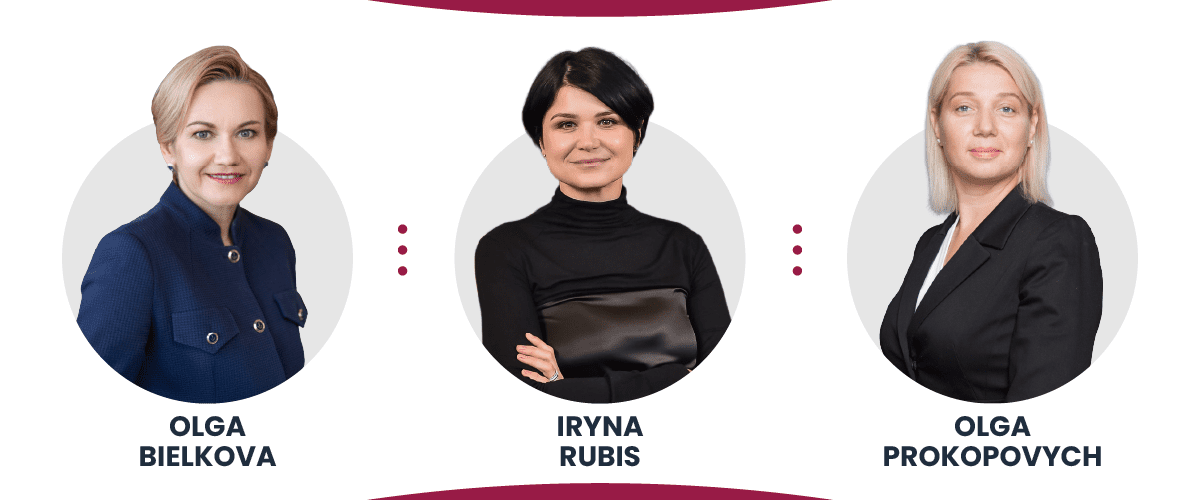
- Olga Bielkova, Senior Consultant at the Ukrainian Agri Council & Environmental Defense Fund, explores how reverse mentorship, learning from the next generation, keeps leadership vibrant, humble, and relevant.
- Iryna Rubis, Director of Biasless and Head of Pislyazavtra NGO, shows how structured mentorship can turn personal transformation into collective empowerment.
- Olga Prokopovych, Group General Counsel, ICU Group, reveals the art of mentorship as a dialogue of equals, one that nurtures authenticity, trust, and a culture where people grow together.
Their stories remind us that mentorship is not a step on the career ladder — it is the bridge that connects experience with possibility, and generations with purpose.
Not just in Kyiv, but across the world, it’s easy to believe that experience drives every decision — a belief that once served well but now needs refreshing as the balance between wisdom and innovation shifts. Decisions in both politics and corporate governance are increasingly influenced by skilful digital communication and social awareness. The new generation shapes how boards think, communicate, and define success. Are boards ready to embrace them as part of decision-making?
Reverse mentorship — when senior leaders or entire systems learn from younger generations — is no longer a curiosity but an essential practice reshaping how leadership works across the EU and beyond. Across the EU, young citizens, professionals, and member states alike are reshaping how leadership works. Their expectations around climate, transparency, and fairness are forcing institutions to evolve faster than any policy reform alone could achieve.
Why Reverse Mentorship Matters for Europe
Europe’s biggest strength has always been its ability to listen — not only across borders but across generations. Yet for decades, listening meant turning to the eldest and most experienced voices. Now, that is no longer enough. Younger Europeans are setting new standards for what good governance means: authenticity instead of slogans, measurable sustainability instead of declarations, and openness instead of hierarchy. They are digital natives, fluent in collaboration and allergic to bureaucracy. For them, ESG is not a checkbox but a mindset.
The European Union has begun to internalize this shift — through the Green Deal, social-innovation programs, and youth dialogues that bring new energy to policymaking. Each enlargement brings in younger member states that inject realism and urgency into older systems, forcing the Union to stay relevant — just as younger voices keep any organization honest and adaptable.
A UK report for the Greater London Authority found that organizations in the UK infrastructure and construction sector are using reverse-mentoring programmes to help board-level and senior leaders learn from younger employees — on topics like digital tools and inclusion — although many of these initiatives are still in early or pilot stages.
Lessons from Within
Working with younger consultants and policy interns has taught me as much as any boardroom discussion. I remember one consultant who proposed using an AI model for data analysis while I was mentoring her on how to formulate the right questions and tasks for that model. The exchange became a perfect example of reverse mentorship in action — where innovation meets experience.
Reverse mentorship brings this kind of ethical and intellectual freshness. Boards should see it not as a side initiative but as a practical governance tool — a way to keep decision-making relevant and connected. It reminds senior leaders that curiosity signals strength, not weakness, and that inviting younger perspectives into board discussions helps institutions reconnect with their true mission — to serve people, not procedures.
Conclusion
When experience meets curiosity, governance becomes renewal, not routine. The best leaders — in business or public life — know that wisdom is cumulative, but insight is generational. Boards and policymakers who invite younger voices into the conversation gain more than diversity; they gain relevance.
Reverse mentorship is not a threat to authority. It’s a partnership of perspectives. Good governance is not about having all the answers — it’s about asking the next generation the right questions and being brave enough to act on what we hear.
When I first encountered mentorship in 2016 through the Vital Voices Global Fellowship — a program once founded by Hillary Clinton and Madeleine Albright — I had no idea it would fundamentally redirect my professional and personal path. At that time, I was a CEO and owner in Ukraine’s media business, and the experience of structured mentorship changed everything for me: it led to the sale of my company and eventually to my transition into the social impact and civil society sector.
My first mentors — one from the FBI, another from Bank of America — were not merely advisors. They were partners in transformation. Our conversations reached far beyond business strategy or leadership tactics; they touched the very architecture of decision-making, courage, and purpose. That experience showed me that mentorship, when built on trust and guided by methodology, can be an engine of profound change.
From Intuition to Methodology
What I particularly admire about the American approach to mentorship is its methodological depth. It’s not an improvisation or an informal exchange of wisdom — it’s a structured process facilitated by trained mentors who understand reflection, goal-setting, and accountability. You cannot simply “be someone’s mentor” because you are older or more experienced. You must master the discipline of mentorship — its frameworks, techniques, and ethics.
Recognizing this, I later collaborated with Odyssey to adapt their mentorship guide for Ukraine. This became the backbone of mentorship components in my women’s empowerment programs — Femunity and Progresiya — which have since reached hundreds of Ukrainian women. In these initiatives, we always start by training mentors—helping them understand their role not as co-navigators of growth.
At the early stage, when I made initial steps in mentoring approach promotion in Ukraine, I even hosted public mentorship sessions. They were open conversations between experienced leaders and emerging talents — an invitation for the business community to taste what real mentorship feels like. It wasn’t coaching, and it wasn’t consulting. It was about shared discovery — a dialogue that activates something powerful inside both participants.
Reframing Mentorship in Ukrainian Corporate Culture
In many Ukrainian companies, mentorship is still seen as a top-down process: the senior guides the junior, the experienced teaches the inexperienced. But true mentorship is bidirectional. It’s a relationship of equals, each bringing their own type of expertise — age, context, or technological fluency. This is why reverse mentorship is such an underrated yet potent instrument.
When a young leader mentors a board member on emerging digital ethics, or when a Gen Z employee helps a CEO understand shifting workplace values, it builds bridges across generations and rebalances corporate culture. In a governance context, such mentorships encourage empathy-based leadership, sharpen decision-making, and foster a culture of continuous learning at every level of the organization.
Mentorship — done right — creates psychological safety and collective intelligence within leadership teams. It allows truth to surface, even when it’s uncomfortable. And in times of uncertainty or transformation, it provides both grounding and momentum: a sense that someone is walking beside you, helping to untangle complexity with clarity and care.
A Call for Mentorship Literacy
After nearly a decade of promoting mentorship in Ukraine’s leadership and social sectors, I am convinced that mentorship literacy should become as fundamental as financial literacy. We need leaders who understand that mentorship is not charity — it’s an investment in shared competence and human capital.
For women in leadership, especially in governance roles, mentorship is not only a pathway to inclusion — it’s a means of reshaping systems from within. It enables women to claim space in decision-making, to act with confidence, and to lead with authenticity.
Those who have experienced mentorship in its truest form know that it offers something rare: an honest mirror. It reflects not who you are expected to be, but who you are becoming.
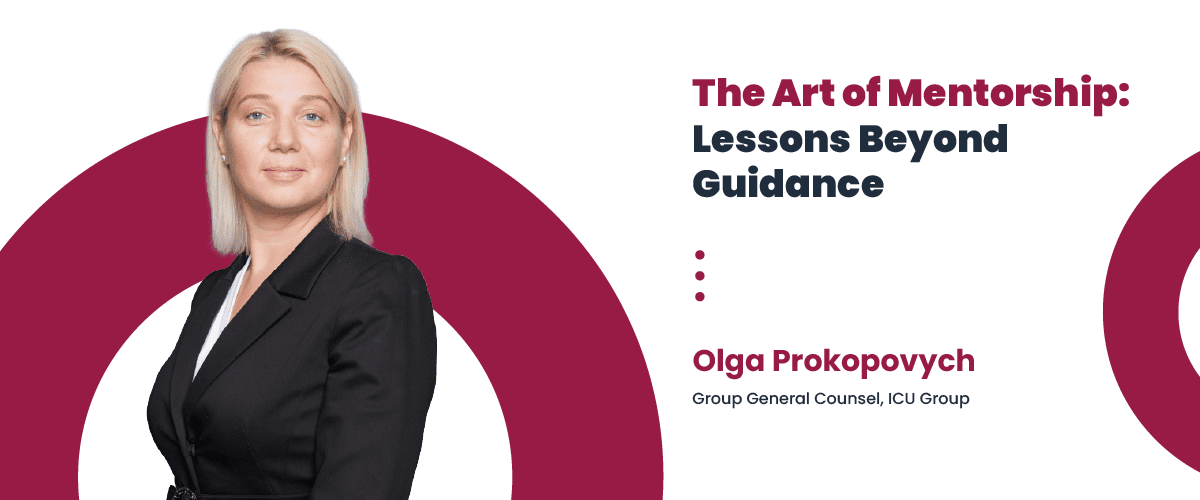
I have been fortunate to encounter remarkable mentors at key moments of my professional journey — each of them shaping not only my career but also my perception of leadership and human connection.
My first experience with mentorship came early, when I joined a law firm as a young lawyer still learning the craft of corporate practice. My mentor, Volodymyr Sayenko, took me under his wing and taught me much more than the letter of the law. He revealed the spirit of the profession — the delicate balance between precision and empathy, and the art of communicating with clients as partners, not as subjects of legal advice. Our conversations often transcended work and gradually evolved into a lifelong friendship built on mutual respect and curiosity. Looking back, I realize that mentorship at its best is not hierarchical — it’s a dialogue where both grow through the exchange.
Years later, I experienced mentorship again in a very different setting — Microsoft’s Women Leaders Program. My assigned mentor was a lawyer of Brazilian origin who had lived and worked in more than ten countries. His worldview was strikingly different from mine, shaped by multicultural experiences and an unshakable sense of curiosity about people and systems. Through our conversations, I learned tolerance and patience, and — perhaps most importantly — how to build a mentoring relationship intentionally.
He taught me that mentorship works when both sides are open: the mentor to share, and the mentee to listen without defensiveness. True learning begins where ego ends. That experience also made me understand that one can seek mentorship not only formally but organically — through every meaningful encounter with people who inspire, challenge, or broaden our thinking.
Over time, I began to treat every interesting conversation as a short mentoring session — an opportunity to learn something new about leadership, decision-making, or human nature. Some of my mentors have appeared only once in my life, during a single insightful meeting that left a lasting mark. Others have walked beside me for years. But the essence remains the same: mentorship is about generosity of spirit, the courage to share experience, and the humility to learn.
In corporate governance, mentorship plays a transformative role. Boards and executives often focus on structures, processes, and compliance — yet culture is what truly sustains good governance. A culture of mentorship creates psychological safety, encourages honest feedback, and develops the next generation of leaders who make decisions with integrity and foresight.
Effective governance is not only about rules — it’s about people who understand each other’s strengths and help one another grow. A mentor on the board can help a new director navigate complex dynamics, read the unspoken cues, and find their authentic voice in the decision-making process. Likewise, a seasoned executive mentoring a younger colleague can ignite confidence, responsibility, and purpose that no manual or policy can instill.
In the end, mentorship is less about teaching and more about connecting. It reminds us that leadership is not a solo journey but a shared path — one illuminated by those who once walked before us and those who now walk beside us.
Across these stories, one truth becomes clear: mentorship is not a gesture of generosity from the powerful. It is the architecture of shared growth. It is where leadership learns to listen, where systems learn to evolve, and where courage quietly multiplies.
What once served as the gatekeeping ritual of the old boys’ club is now being rewritten by women who lead differently. They mentor through empathy, not authority. They pass forward wisdom without walls. They teach that leadership is not inherited but created through connection, reflection, and the willingness to grow together.
In every boardroom, team, or initiative that embraces this spirit, mentorship becomes more than a tool. It becomes a culture that replaces competition with continuity, isolation with inclusion, and hierarchy with humanity.
As Ukraine rebuilds, redefines, and reimagines its future, this approach to mentorship offers a model for leadership itself. A model built not on legacy but on learning, not on power but on partnership, not on titles but on trust.
Because the future of leadership will not be built by those who guard the gates, but by those who open them.