Insights by WoBua
2024-11-05
November 2024
Elevating Corporate Governance for Resilience and Growth
In the face of immense challenges, Ukraine's commitment to robust corporate governance is more critical than ever. Sound governance practices underpin stability and sustainable growth, particularly as the country rebuilds its infrastructure and aligns with European standards. This edition of the Women on Boards Ukraine newsletter spotlights the importance of governance frameworks that foster resilience, mitigate risks, and champion accountability in times of change. Highlighting both positive transformations and critical areas for improvement, this issue underscores our shared mission to strengthen Ukraine’s organizational backbone—a mission essential for national security and for building trust with international stakeholders.
Corporate Governance in PrivatBank
 Corporate Governance reform was pioneered in state-owned banks, with the updated Banking Law in 2019 providing guidance on the selection of Supervisory Board members and defining reasons for premature termination. This led to a historic moment, as the supervisory boards of three state-owned banks were first elected through a transparent, competitive process, ensuring independence from political influence. The transparent selection process enabled merit-based appointments and scrutiny.
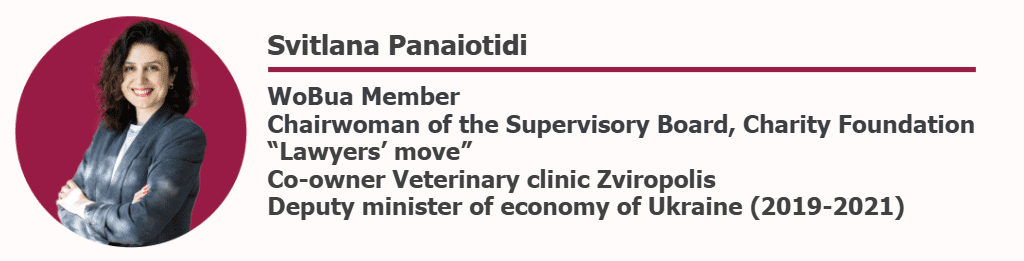
I’ll share my experience on PrivatBank's SB from July 2019 to December 2022, focusing on key elements of its success.
- The transparent selection process resulted in a diverse, skilled SB with expertise in areas critical to PrivatBank. Each field—governance, strategy, finance/audit, legal, or risk management—was represented, ensuring the Board collectively had the skills to govern PrivatBank.
- The Board adopted a democratic approach in corporate governance, fostering open dialogue and transparent discussions where each member could contribute, share insights, and challenge perspectives. The SB Chair ensured this approach, though it posed challenges with nine members contributing, often leading to prolonged discussions and time management difficulties. Over time, frameworks were developed to address these issues.
- The Board invested in building relationships and trust. In the first year, we held a retreat, spending a few days discussing the bank’s challenges and aligning on strategy, vision and mission. Through these discussions, we unified around the core value we aimed to bring to the institution.
- The SB focused on frameworks to streamline governance processes. We developed a matrix of responsibilities, divided among committees – allowing the delegation of technical reviews to experts within the committees, easing time management in full Board meetings. This also ensured well-prepared decisions, contributing to more effective and strategic governance. Another example was the Supervisory Board Plan, a strategic framework addressing areas necessary for recovery, and growth: updating the bank’s strategy, improving corporate culture, enhancing control systems, business continuity planning, quality of information, monitoring and assessing of the operational effectiveness of the executive management, decreasing Non-Performing Loans, etc. SB members sponsored various initiatives, promoting engagement, oversight, and focus on key issues. This annually updated plan allowed the Board to monitor progress, allocate resources, and prioritize tasks. Together with the strategy of the bank, it guided the development of KPIs for executive management. As a result, strong foundational systems were established in Risk Management, IT, business development, and HR.
- Transforming Executive Management under SB oversight was crucial. Over the first 1.5 years, the executive team was restructured to meet PrivatBank’s strategic needs, ensuring the skillset to manage a complex and transforming institution. The transparent and competitive process with independent executive search companies ensured that the best candidates were chosen based on merit and qualifications. The Board's independence and strictly defined selection processes allowed the SB to select the strongest candidates despite external pressure from multiple sources.
- Culture Transformation started with the Code of Ethics, Conflict of Interest policy, and Code of Corporate Governance. This was challenging, as the bank, before nationalization, had operated with unethical and predatory practices. Transparent selection processes were cascaded to the regional centers for merit-based hiring. This initiated regional transformation, turning “kingdoms” of regional offices into the manageable branch network, supported by strengthened HR practices, performance management, and a structured remuneration policy. Building a system of checks and balances, including enhanced risk management, compliance, and internal audit functions, was also critical to this cultural shift.
Corporate governance reforms enabled PrivatBank’s profound transformation, establishing strong, transparent structures and leadership. This not only restored the bank's integrity but also allowed it to withstand crises like COVID and the invasion. PrivatBank exhibits exemplary risk management, sound financial practices, and a responsible business approach to providing access to finance across the country. The Bank’s staff showed unimaginable dedication and responsibility to ensure the availability of essential services to the customers under the full-scale invasion. Today, the bank is one of the largest taxpayers in the country and one of the most profitable state-owned businesses since nationalization.
Ukraine's Energy Integration Faces Challenges After Ukrenergo Governance Changes
 Ukraine’s progress toward integration into the European energy network, a vital support during the ongoing conflict with Russia, is encountering challenges due to recent changes in the corporate governance of Ukrenergo, the national electricity transmission system operator. The situation, following the recent dismissal of the CEO and the subsequent resignation of TWO independent supervisory board members, has led to concerns from the Energy Community Secretariat regarding Ukraine's compliance with EU energy regulations.
The Role of EU Integration in Supporting Ukraine’s Energy Stability
In March 2022, Ukraine successfully synchronized its electricity grid with the European Network of Transmission System Operators for Electricity (ENTSO-E). This synchronization was instrumental in ensuring a stable electricity supply after the Russian invasion significantly impacted Ukraine’s energy infrastructure, especially its balancing capacities. The ability to import electricity from the EU became essential for maintaining services and providing power to millions of Ukrainians.
Governance Reforms: The Basis for Synchronization
This synchronization hinged on Ukrenergo achieving certification as a transmission system operator, a process that required significant corporate governance reforms. Ukrenergo made considerable efforts to meet these requirements, including:
- Creating an Independent Supervisory Board: The board was established to ensure that Ukrenergo’s operations would be managed independently of government interference.
- Enhancing Internal Controls and Risk Management: Measures were implemented to maintain transparency and accountability.
- Introducing Organizational Changes within the Ministry of Energy: These adjustments were aimed at minimizing conflicts of interest, given the Ministry's dual role as both shareholder and policymaker.
Recent Governance Shifts: Implications for Progress
The dismissal of the CEO and the resignation of independent board members have impacted the progress made, creating uncertainty around Ukrenergo's governance structure. This change raises concerns about potential political interference and challenges in maintaining compliance with EU energy standards.
Energy Community's Observations and Suggested Steps
In response to the recent developments, the Energy Community Secretariat has issued a letter, outlining areas of concern and suggesting key actions:
- Need for Independent Supervisory Board Members: The letter emphasizes the importance of appointing four independent members by December 9th, 2024.
- Revisiting Ukrenergo's Charter: Strengthening the independence of the Supervisory Board is a priority.
- Implementing Order No. 162: This order is aimed at addressing potential conflicts of interest within the Ministry of Energy.
- Reviewing Order 408/2022: Adjustments to this order could enhance the independence of Ukrenergo's operations from ministerial oversight.
The Energy Community Secretariat has indicated that failure to address these issues by December 9th could lead to the reopening of the certification procedure for Ukrenergo, which might limit Ukraine's ability to import electricity from the EU and impact its energy security.
Looking Ahead: The Importance of Addressing Governance Concerns
This situation underscores the fragile nature of Ukraine's energy infrastructure and the pressing need for stable governance. Currently, "Ukrenergo" is unable to operate effectively, as it functions without a CEO and an independent supervisory board. The government has announced a competition for the selection of three independent board members, while the fourth is being chosen through a previously initiated process. The appointment of all independent supervisory board members is scheduled for completion by December 9, 2024. Addressing these governance challenges is essential for securing uninterrupted energy supply and supporting Ukraine's integration into the European energy market. A timely resolution will be vital to reinforcing the country’s resilience amidst ongoing conflict and aiding its long-term recovery.
Conclusion:
The experiences of PrivatBank and Ukrenergo illustrate Ukraine's critical journey in aligning corporate governance with international standards. PrivatBank’s transformation showcases how robust governance reforms can drive stability, attract investor confidence, and ensure operational continuity even amid challenges. Conversely, Ukrenergo’s recent setbacks underscore the vulnerability of governance progress when political interference compromises institutional independence. These issues threaten not only Ukraine’s EU energy integration but also its broader energy security.
A consistent, transparent governance approach across sectors will be essential for Ukraine’s economic resilience and ambitions for European integration. By upholding high governance standards, Ukraine can bolster public trust, secure international support, and pave the way toward a sustainable future within the European community. Women on Boards Ukraine is committed to promoting practices that reinforce transparency, accountability, and inclusivity, helping Ukrainian institutions thrive in a dynamic global landscape.