
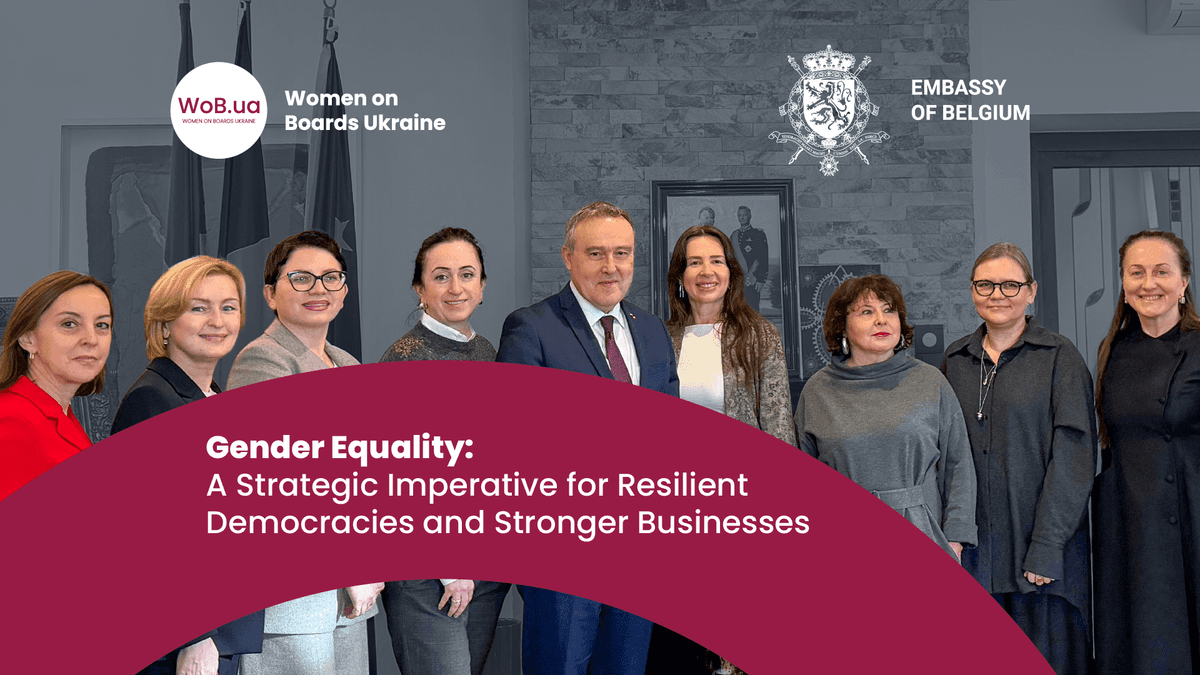
Gender Equality: A Strategic Imperative for Resilient Democracies and Stronger Businesses
2026-03-08
Explore how Belgium’s policies, institutional framework, and board diversity laws have advanced gender equality while strengthening governance, democratic resilience, and business leadership.
Constructive dialogue is often the starting point for meaningful change. It creates space to exchange experience, reflect on progress, and identify practical steps that can turn shared values into concrete action.
This publication grew out of such a dialogue, following a meeting at the Embassy of Belgium that brought together representatives of the public and private sectors to discuss diversity, gender equality, and the role that institutions, businesses, and professional communities can play in advancing inclusive leadership.
The conversation highlighted how different countries and organizations approach these challenges, while also revealing a common understanding: strengthening gender equality is essential for resilient democratic institutions and sustainable economic development. Inspired by these exchanges, and on the occasion of International Women’s Day, we are pleased to share reflections on the Belgian experience in advancing gender equality and promoting women’s representation in leadership. These insights contribute to a broader conversation about how inclusive leadership strengthens governance, enhances credibility, and helps build institutions and companies that better reflect and serve the societies in which they operate.
At a time of geopolitical instability, economic transformation, and increasing pressure on democratic institutions, gender equality is no longer solely a matter of principle. It is a strategic imperative. Inclusive leadership strengthens institutional resilience. Diverse decision-making improves governance quality. And representative boards enhance credibility in the eyes of citizens, investors, and global partners.
For Belgium, advancing gender equality has never been symbolic. It has been structural, legal, and strategic.
From Constitutional Commitment to Structural Reform
Belgium began embedding equal opportunities into its public and private sectors in the early 1980s.
• In 2002, equality between women and men was enshrined in Article 10 of the Constitution. • In 2007, the Gender Mainstreaming Law created a federal framework to integrate gender perspectives across all public policies and prohibit discrimination based on gender, gender identity or expression, pregnancy, childbirth, and motherhood.
These steps were not taken in isolation. They formed part of a deliberate ecosystem designed to translate principles into measurable progress.
An Institutional Ecosystem that Delivers
To ensure implementation, Belgium built a robust institutional framework. The Institute for the Equality of Women and Men, founded in 2002, plays a central role in promoting equality and combating discrimination. Federal coordination mechanisms bring together expertise across administrations, while advisory bodies provide research, recommendations, and policy oversight. Importantly, women’s organisations and feminist associations are systematically consulted, particularly in the development and monitoring of national action plans to combat gender-based violence. This whole-of-society approach ensures accountability and results.
The Business Case: Women on Boards
One of Belgium’s most impactful measures has been the 2011 federal quota law requiring listed companies and autonomous public enterprises to include at least one-third women on their boards. The results have been transformative. Women’s representation on boards increased from 8.3% in 2008 to 34.1% in 2020. Belgium moved from below the European average to becoming one of the leading EU Member States in gender-balanced corporate governance.
It is a success story for governance.
Diverse boards are associated with stronger decision-making, improved risk management, broader innovation capacity, and enhanced long-term performance. In an environment where investors increasingly assess governance quality, ESG performance, and leadership credibility, gender-balanced boards signal maturity, stability, and forward-looking stewardship.
Behind every percentage point are women whose expertise, leadership, and judgment now shape strategic decisions at the highest level.
Belgium continues to align its legislation with the EU Women on Boards Directive adopted in 2022, which requires large EU-listed companies to achieve at least 40% female non-executive directors or 33% female representation across all board positions by 30 June 2026.
Today, Belgium ranks among Europe’s top performers in gender-balanced corporate governance and is widely regarded as one of the most successful EU Member States in implementing the Directive.
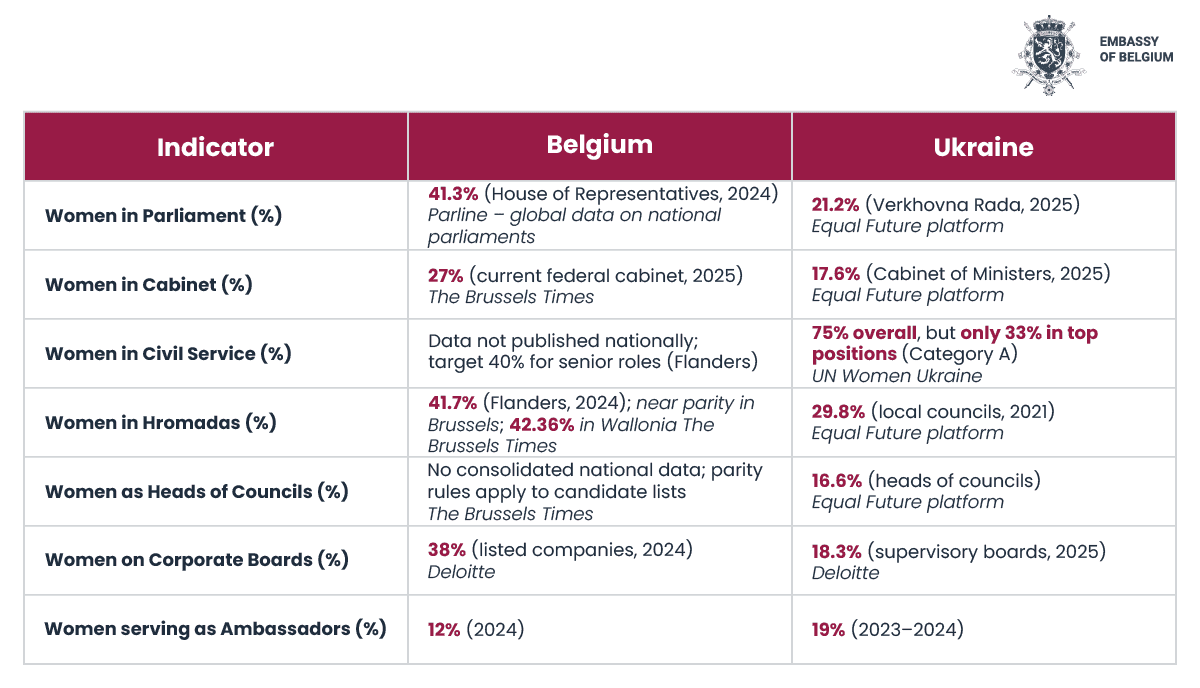
Why This Matters Now
The global environment demands institutions capable of navigating complexity. Climate transition, digital transformation, supply chain reconfiguration, and geopolitical volatility all require leadership that reflects the diversity of the societies and markets they serve.
Gender-balanced leadership is not a “soft” objective. It is a governance standard. The partnership between the Belgian Embassy and Women on Board reflects this shared conviction: progress accelerates when public institutions and business leaders move forward together. It demonstrates how public-private cooperation can translate values into measurable outcomes.
For companies, the message is clear:
- Diversity strengthens governance.
- Inclusive leadership drives performance.
- Equality enhances credibility.
- And representation shapes the future.
Gender-balanced leadership is not just about fairness. It is about unlocking talent, fostering innovation, and building institutions that reflect the societies they serve.
The Belgian experience shows that when political commitment, institutional design, and corporate responsibility converge, transformation becomes not only possible but sustainable.
The next chapter of resilient democracies and competitive economies will be written by inclusive leadership. The question is no longer whether we can afford to advance gender equality, but whether we can afford not to.