

Ukraine cannot afford weak governance in its most critical companies. So why are strong board candidates walking away?
2026-10-02
Ukraine has built formal corporate governance frameworks. The challenge now is making independence, transparency, accountability and board authority work in practice.
Ukraine is again facing an escalation of horrific attacks on its cities, people and critical infrastructure. After more than four years of full-scale war, Ukrainian companies are operating under extraordinary pressure: protecting people and assets, maintaining operations through constant disruption, managing scarce resources and capital, and making difficult decisions under extreme uncertainty.
There is less room than ever for weak management, blurred accountability or avoidable inefficiency. Companies need clear priorities, disciplined execution and the ability to act quickly. For Ukraine's largest state-owned enterprises and banks, many of which are essential to the functioning of the economy, strong corporate governance is not an abstract reform objective. It is an operational necessity.
Supervisory Boards are at the centre of that governance. Ukraine has spent years building a framework designed to give independent Boards meaningful responsibility for oversight, management accountability and strategic decisions. But governance is ultimately tested not by what is written in law, but by whether it works when decisions become difficult.
And this is where a contradiction is emerging. Recent controversies over board appointments, shareholder intervention, board authority and the predictability of directors' mandates raise an uncomfortable question: at precisely the time when Ukraine most needs experienced, independent professionals overseeing its critical institutions, are we creating the conditions that will make them want to serve?
For a prospective director, the questions are practical. Will the Board be allowed to exercise its authority? What happens when the shareholder disagrees? Am I protected if I act in good faith? And what does accepting the role mean for my family, career and professional reputation?
Ukraine continues to attract accomplished Ukrainian and international professionals willing to serve. Several contributors to this issue have served on Ukrainian Supervisory Boards; others have seriously considered applying. We asked them what gives strong candidates pause today - and what would give them confidence to serve.
The candidate’s first question: who will I be serving with?
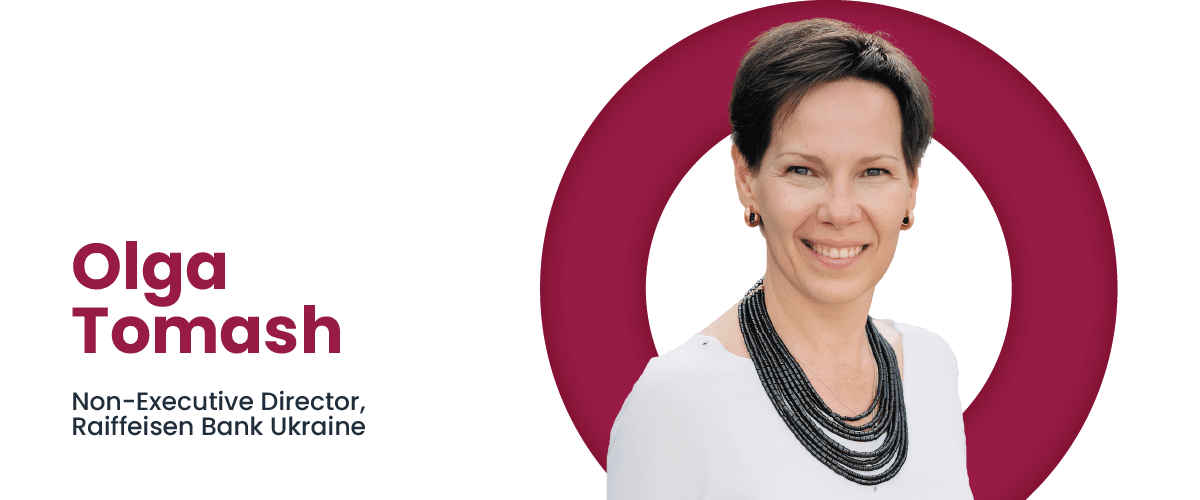
When I applied for an independent Supervisory Board position at PrivatBank in early 2019, I had many questions. Apart from obvious risks related to ex-shareholders, one question particularly bothered me: why had some previously selected candidates withdrawn after being appointed? What had they discovered that I did not yet know?
Part of the answer seemed straightforward. Ukrainian independent directors of state-owned banks faced extensive e-declaration requirements, including disclosure of family assets, with significant responsibility for errors. International directors were subsequently exempted, but for Ukrainian candidates this remains a consideration.
Seven years later, if I were considering a similar position, I would think much harder. I experienced first-hand that an independent, professionally composed Supervisory Board can resist pressure and transform a state-owned institution. Yet controversies involving Naftogaz, Ukrenergo, Energoatom and, most recently, Sense Bank raise questions about how governance operates in practice.
Today, I would want to understand not only the institution and its risks, but also the selection process itself. Who will be selected alongside me? Will competence and independence determine the final board composition? How long will appointment and regulatory approval take? Will the Board have quorum and be able to function? And will its legally defined authority be respected?
The recent Sense Bank controversy illustrates some of these concerns. Questions have been raised publicly about a candidate selected despite not being recommended by the executive-search adviser. It raises a broader governance question: how do we ensure confidence in the integrity of the selection process and resulting board composition?
Executive-search firms are not infallible. They can themselves be exposed to pressure to include “desired” candidates in a shortlist. But if a professional adviser has been hired to independently assess candidates and the selection body subsequently overrides its non-recommendation, this should at least ring a bell. What safeguards should apply? Should such decisions require documented justification? Is stronger scrutiny from international stakeholders part of the answer?
This matters because independence is not created simply by labelling six seats “independent.” A board is a collective body. Its ability to act depends on who occupies those seats, their competence and integrity, and their willingness to exercise independence when it becomes uncomfortable.
From my own experience as Chair of PrivatBank’s Nomination Committee, I can add a factor that rarely appears in formal descriptions of corporate governance: informal pressure, particularly around CEO appointments.
But pressure can be resisted. It is difficult, but doable. With independence comes an obligation to use it. When circumstances no longer allow a director to fulfil their mandate independently, sometimes the responsible option is to leave.
Recent cases have shown how formal arrangements can be challenged through shareholder intervention, incomplete boards, delayed appointments and wholesale board replacement. This does not necessarily mean the model or the law is wrong. A good law can be bypassed through informal processes; a well-designed control can fail in practice.
Another structural issue deserves more attention: continuity. The Supervisory Boards of the state-owned banks were initially selected at roughly the same time in 2019. Several years later, the independent positions again went through competition, resulting in substantial simultaneous renewal.
Changing most independent directors at once is inefficient. New boards need time to understand the institution, establish relationships with management, develop working dynamics among directors and acquire institutional memory. Delays in selection, appointment or regulatory approval can make the problem worse and can leave an institution with an incomplete or sometimes even temporarily non-functioning board.
There is also a less visible risk. As the end of the Board’s term approaches and everyone knows that all independent positions will shortly be contested, even strong and genuinely independent directors may fall into the psychological trap of “let’s not rock the boat until we know whether we are reappointed.” That is precisely when difficult and potentially unpopular decisions may be postponed.
A staggered rotation of independent directors would preserve institutional knowledge, reduce quorum risks and, importantly, make independence less dependent on a single reappointment moment.
What would help restore confidence among strong Ukrainian and international candidates?
- Protect the integrity of the selection process and board composition;
- Introduce predictable timelines and staggered rotation; and
- Ensure Supervisory Boards’ statutory authority cannot be circumvented when their decisions become inconvenient.
Serving on a Ukrainian state-owned board during a war inevitably involves risk. Interestingly, the requirement to physically attend meetings in Ukraine does not appear to be the deterrent: the number of highly qualified international professionals continuing to apply is impressive.
The greater concern is asking good professionals to accept governance, legal and reputational risks that they cannot reasonably assess, influence or control.
I would still consider serving. But I would think much harder today than I did in 2019. The next stage of reform should ensure that independence, transparency and accountability work as reliably in practice as they do on paper.
When independence exists on paper but not in practice
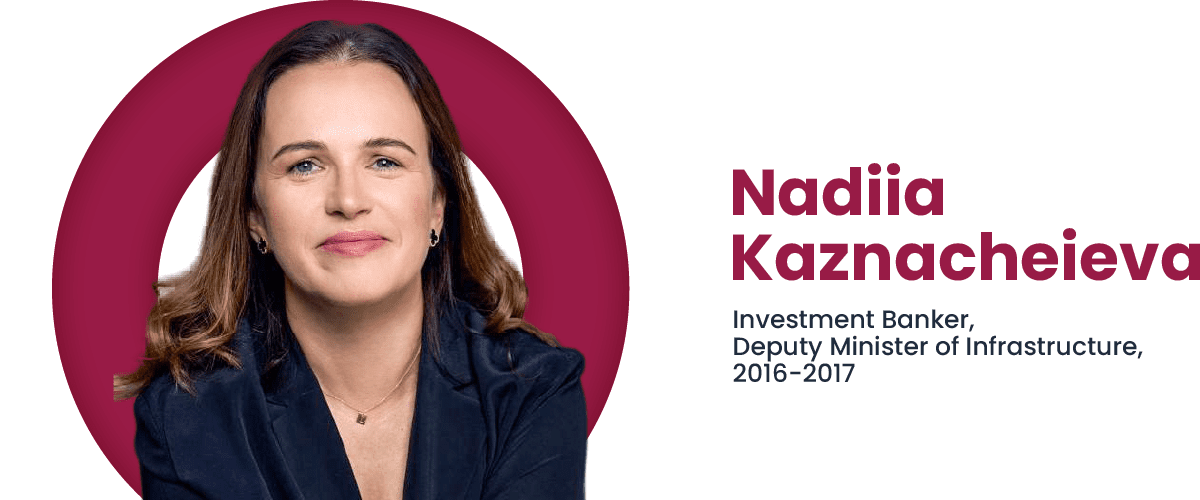
My starting point is simple: today, being a board member of a state-owned business in Ukraine creates more risk than opportunity for a strong professional, compared to an equivalent role in the private sector. This holds true at every stage, from the selection process, through the actual execution of the role, to the unpredictable way a mandate can end.
Start with selection. I personally have not seen a genuinely transparent board recruitment process in the Ukrainian public sector in recent memory. What I have seen, repeatedly, is a process that quietly favours "preferred" candidates: people who are easier to work with, or easier to persuade, over people who might actually challenge management or the shareholder.
On top of that, there are rudiments that should have been eliminated from the application process long ago: informal discrimination based on nationality, and informal discrimination based on a candidate's prior professional experience. Neither has anything to do with a candidate's competence or future potential, yet both are still weighed heavily, informally, behind closed doors.
The result is predictable: the pool of realistic candidates stays artificially small, and a perception takes hold - fairly, in my view - that this is a closed list, an established "club," with little real room for genuinely motivated, independent people to join. And once capable people believe the door isn't actually open to them, they stop knocking. That's the real cost: not that bad candidates get in, but that good ones stop applying at all.
What are the main barriers preventing independent board members from genuinely influencing decisions and making a difference? Legally, on paper, the picture looks strong. Since 2017, supervisory boards have exclusive authority over appointing and dismissing executive management and approving strategic, financial and investment plans, and the law requires a majority of board members to be independent. In practice, however, reality consistently outruns the law. We have seen cases where board decisions were overridden or blocked informally - by a ministry, by the shareholder, by processes that sit entirely outside the board's own decision-making. That alone creates deep uncertainty among board members about how much real power their seat actually carries.
A second barrier concerns board composition itself, specifically the role of state representatives. By law, even state representatives are required to act independently and in the company's best interest, carrying the same fiduciary duties as independent members. In practice, this principle is not always reflected in how these representatives actually vote and behave. The consequence is that an "independent majority" on paper does not reliably translate into an independent majority in the room — the numbers can look right while the dynamic in the boardroom is anything but.
A third, related barrier is that some decisions are effectively taken around the board rather than by it. We have seen strong independent members resign in protest as a result. To me, that is the clearest possible barometer of how little influence a board member felt they actually had over how a decision was made - when the people with the most standing to fight for the board's authority conclude that resigning is more useful than staying.
The last, but far from least important, barrier is the unpredictability of how a mandate ends. For a genuinely strong candidate, clear and fixed terms of appointment are one of the deciding factors in whether to join a board at all. Recent cases involving Ukrainian state enterprises show the opposite: boards can be dismissed under political pressure, with no predictable process, and with real reputational risk attached to having served on them. A board seat that can end abruptly, for reasons outside your control, and leave a mark on your name regardless of your own conduct, is a very different proposition from a private-sector board mandate - and strong candidates know the difference.
If I had to name the three changes that would actually move the needle — in order of what's most within reach — I would point to the following:
Insulate the selection process from the shareholder ministry, and remove the old rudiments still shaping it informally. The nominating and selection committee, with genuinely independent professional members, needs to be the only route to appointment - no side-door direct appointments, and no informal weighting of a candidate's nationality or former employer that has nothing to do with their competence.
Give boards a real, tested mechanism to enforce their exclusive powers against the shareholder. Independence on the org chart means little if it can be quietly overridden without consequence.
Make dismissal route as a clear process based on results with cause-based procedure, that will reassure a candidate that accepting the seat isn't accepting a mandate that can vanish overnight.
The cost of the seat doesn't end with the mandate
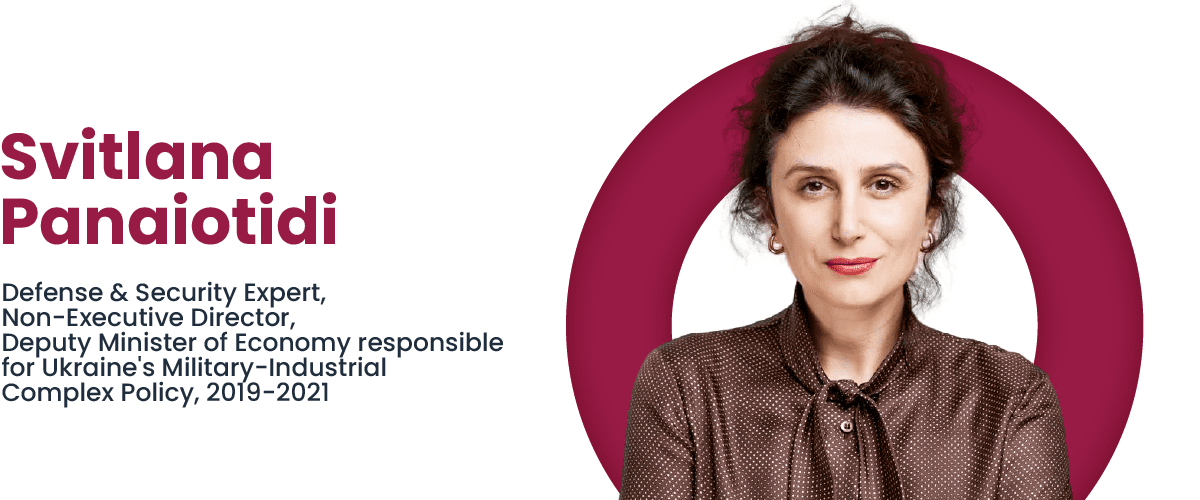
While other contributors to this issue have focused on what happens inside the boardroom - selection integrity, board authority, and dismissal risk - I would like to focus on what happens before any of that: the moment a candidate discovers what accepting the seat actually costs, permanently, for people who never applied for anything.
In Ukraine, once you take on a position that makes you a politically exposed person, under current law, that's the Chair of the Supervisory Board, not every member - that status is for life. And "for life" isn't rhetorical: as implemented, there's no de-facto difference between a sitting Chair and someone who left the seat ten years ago. Both are monitored as maximum-risk today, on identical terms, and so is their spouse, their children, and their business partners - indefinitely, regardless of how long ago the chairmanship ended.
The chairmanship itself isn't a fixed appointment, but it typically rotates among board members over the course of their terms. So the calculation isn't really "am I the Chair," but "will I ever be." Any member who joins the board is, in practice, joining the pool from which the next Chair is drawn and with it, a live risk of triggering this lifelong regime for themselves and their family at some point down the line, not necessarily at the moment they sign on.
That's the real design flaw: not that the status exists, but that it never decays. A candidate isn't pricing in a burden tied to a four-year mandate, they're pricing in a permanent reclassification of their household that a decade of distance won't undo. The EU addressed this. Under Directive (EU) 2015/849 and the incoming AML Regulation, enhanced monitoring runs for a minimum of twelve months after leaving office, and continues only where an institution can point to a genuine, currently assessed risk, risk that's expected to fade with time and distance. Ukraine's regime has no such fade: year one and year ten look identical.
A status that never expires doesn't protect anyone, it just turns the seat into a lifetime sentence for a candidate's family, with no review date. If Ukraine wants to keep attracting the caliber of people this reform was built for, building in that decay isn't a technical AML fix. It's the same governance question the other contributors are raising: whether the system treats capable people as partners worth protecting, or as collateral it can draw on indefinitely.
One mandate, unequal exposure
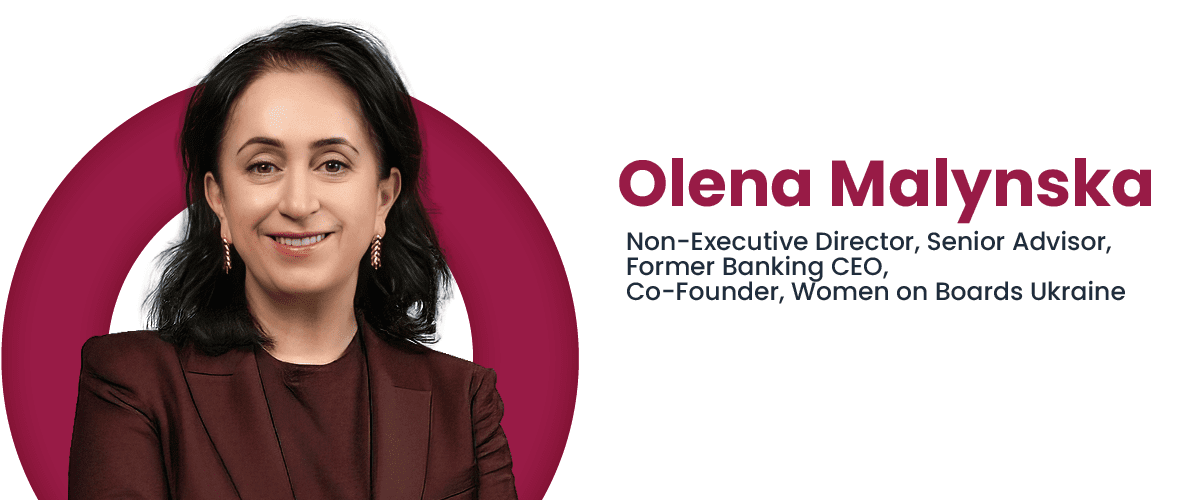
Every governance code starts from the same premise: a board is a collective body. Its members share responsibility, exercise judgment together and are jointly accountable for its decisions and performance. On the Supervisory Boards of Ukraine's state-owned companies, the responsibility is shared. The conditions under which directors carry it are not.
Start with disclosure. Ukrainian independent directors must submit extensive declarations of personal and family assets; foreign non-resident independent directors sitting beside them are exempt. Same decisions, same fiduciary duties, fundamentally different personal exposure. What is the governance rationale for that? Integrity is not a function of passport or residency.
The contradiction runs deeper. We deliberately seek independent directors with established careers, financial independence and reputations beyond the boardroom, because genuine independence requires the ability to challenge management and the shareholder without depending on either. Yet for a Ukrainian professional, a single state-company mandate brings a much wider part of their financial life, including their family's, into the disclosure regime. The very qualities we look for in an independent director raise the personal cost of becoming one.
Now look at the table as a whole. Ukrainian independent directors carrying additional exposure. Foreign independent directors exempt from it. State representatives who may receive no additional remuneration for board work while remaining professionally dependent on the shareholder. One board, one set of decisions, one collective responsibility, and three fundamentally different relationships with risk, reward and the shareholder.
This is not about who is more or less independent. The problem is structural, not personal. A board works when its members can exercise judgment from a reasonably aligned position of interest, motivation and purpose. But how do you sustain that alignment when people carrying the same collective responsibility face unequal personal risks, different economic incentives and different relationships with the shareholder? These differences inevitably enter the boardroom. They affect what each director has at stake when challenging, voting or deciding whether to remain on the board at all. A governance system should not depend on individuals overcoming incentives and dependencies that the system itself has created.
Then there is responsibility without authority. Some decisions are reserved to the state by law. If political considerations stop the shareholder from taking them, the board cannot step into its place, yet directors remain accountable for an institution shaped by decisions they cannot make and paralysis they cannot resolve. They can challenge, document, escalate and insist. Eventually, resignation may be the only credible way to preserve independence. But losing capable directors is not evidence that governance is working.
What would change the equation?
- One mandate, comparable standards. Ukrainian and foreign independent directors in the same role should face equivalent disclosure principles, focused on what is relevant to the mandate: conflicts of interest, related parties and material business interests.
- Independence built into the structure. State representatives need clear mandates, appropriate remuneration and sufficient protection to exercise their fiduciary duty to the company, so that independence does not depend on personal courage alone.
- No accountability without authority. Decisions reserved to the shareholder need clear timelines, ownership and escalation routes, so that directors do not carry the consequences of inaction they cannot resolve.
None of this is about making board service easier. Independent directors should be scrutinised, challenged and held accountable. The question is whether responsibility, authority and exposure are designed coherently enough for strong professionals to exercise genuine independence once they accept the seat.
A board does not become independent because enough of its seats carry the label. It becomes independent when the people in those seats have both the authority and the conditions to exercise independent judgment together.
Equal responsibility requires comparable standards. Accountability requires authority. Strong candidates are not asking whether they want to serve. They are asking whether they will be able to.
What would make strong candidates say yes?
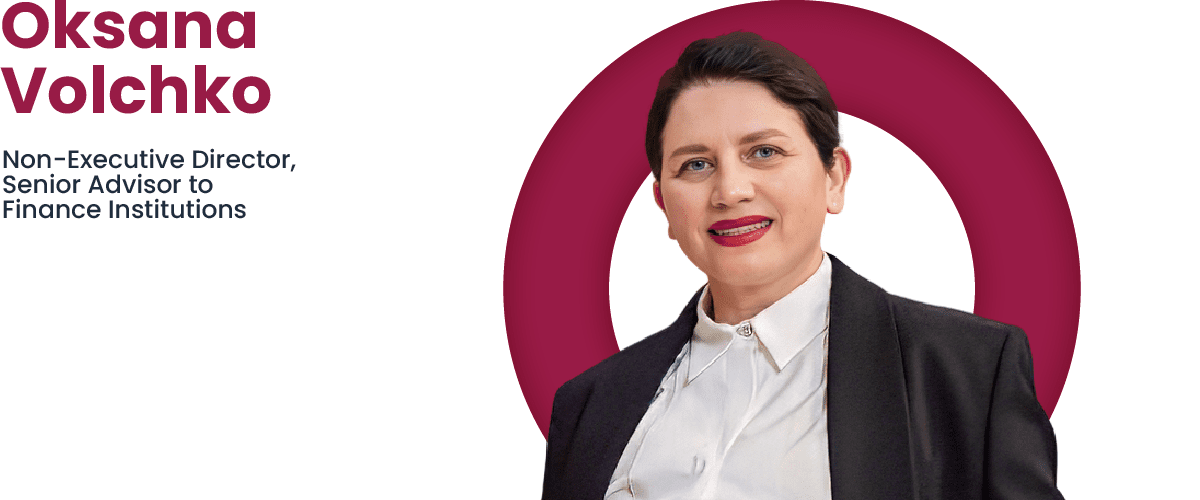
While I remain deeply committed to supporting Ukraine’s economic resilience and growth, I currently refrain from applying for supervisory board positions in state-owned enterprises and state banks due to important structural considerations. The selection processes in my opinion lacks the full degree of institutional clarity and predictable transparency that prospective directors need to feel entirely confident in the journey. There should be robust legal protection mechanisms designed to shield board members when managing critical operational and systemic risks. Without a clear framework that ensures both procedural predictability and adequate safeguards in times of war, taking on such high-stakes oversight presents an unmanageable personal and professional exposure.
What are the main barriers preventing independent board members from genuinely influencing decisions and making a difference?
- Governance asymmetry: from recent events - state shareholders often treat supervisory boards as administrative execution arms rather than autonomous strategic bodies with informal political pressures, dynamic regulatory interventions
- Robust legal safeguards or systemic protection mechanisms are lacking.
- Oversight requires transparent, real-time access to accurate operational and financial data.
What are a few concrete changes needed to restore the confidence of strong Ukrainian and international candidates in the supervisory board selection process and the corporate governance system more broadly?
- Establish Legal Protections for Board Directors by introducing of clear statutory indemnification frameworks and institutionalize market-standard legal support for independent directors acting in good faith
- Full transparency and independence in the selection process (!!!), fully standardized, transparent, and merit-based recruitment processes.
- Grant supervisory boards absolute authority over executive appointment, performance evaluation, and compensation, ensuring true operational leverage.
What comes next
The message from these perspectives is not that Ukraine’s corporate governance reform has failed. Quite the opposite: the country has built important institutions, established formal powers for Supervisory Boards and demonstrated that independent governance can work, including under extraordinary circumstances.
The challenge now is to close the gap between formal independence and practical independence.
For strong Ukrainian and international professionals to continue seeing Supervisory Board positions as credible opportunities to contribute, they need to know that the selection process is transparent, that board authority will be respected, that mandates are predictable, and that directors acting in good faith have meaningful legal and institutional protection.
Across the perspectives shared here, recurring priorities include a merit-based and insulated selection process, enforceable board powers, clearer rules around dismissal and continuity, and stronger safeguards for directors.
Ukraine’s next stage of corporate governance reform may therefore be less about creating new rules and more about making existing ones work consistently in practice, especially when the decisions become difficult, politically sensitive or inconvenient.
Ultimately, the credibility of the system will be measured by the confidence it gives the people being asked to serve. Strong professionals need to be able to understand the risks, trust the protections, and make the decision to serve with confidence.