

Four Years In: Building Ukraine's Future Under Fire
2026-03-20
Four years into war, Ukrainian businesses aren’t just surviving—they’re evolving. Leaders across industries reveal what keeps them building amid uncertainty and destruction.
What gives business leaders the confidence to keep going
Every single day of this war costs Ukraine an average of $172 million. Over 14% of housing in the country has been damaged or destroyed, and a fifth of Ukraine’s land remains under occupation. By the end of 2025, Ukraine’s real GDP stood at roughly 79% of its pre-war level.
And yet Ukrainian business continues to operate. About 85% of Ukrainian businesses remain operational today, and surveys show that 90% of companies are fully operational even after four years of war, while 61% plan to expand their business in Ukraine in 2026.
This is the paradox of wartime Ukraine: a country absorbing devastation at industrial scale, while simultaneously building something new inside it.
Four years is a long time to sustain anything under fire — a marriage, a belief, a business. It is nearly as long as World War I lasted. It is long enough for emergency responses to harden into systems, for improvised solutions to become industries, for survival instincts to sharpen into strategy.
We asked four Ukrainian business leaders, across banking, defense manufacturing, law, and organizational development — one question: What gives you confidence to keep building?
Here is what they told us.
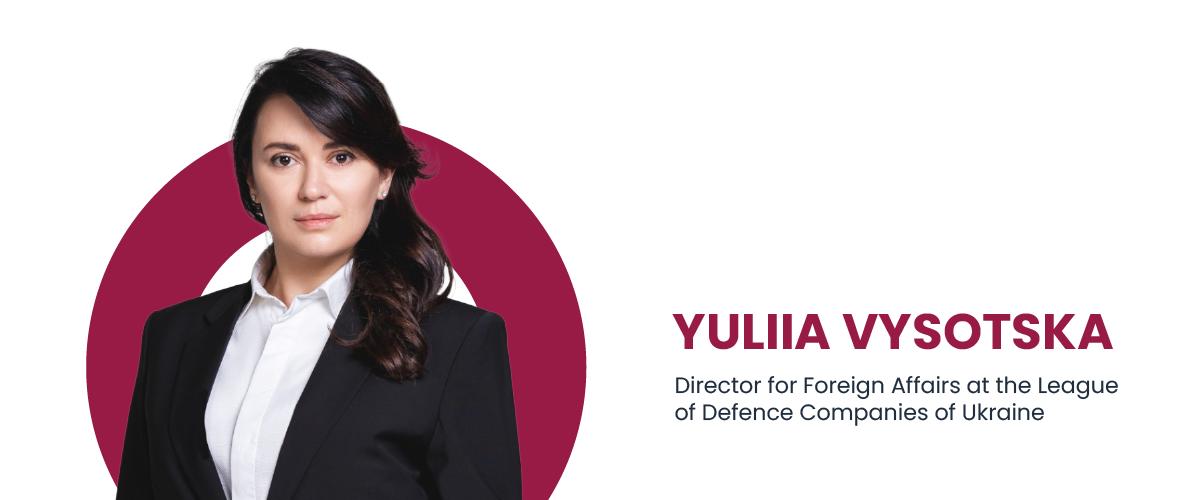
Four years of full-scale war have fundamentally changed the philosophy of Ukrainian business in the defense sector. My confidence in the future stems from the fact that we have transitioned from emergency repairs and volunteer solutions to scaling a sustainable industrial system. Today, the Ukrainian defense industry is no longer just an "adjunct to the war," but a distinct innovation economy and a powerful magnet for talent.
Our confidence is tempered by the experience of surviving in extreme conditions. We continued to work from the first days of the full-scale invasion to ensure the independence and very existence of our country. Some companies resumed operations as early as two weeks after the start of the war, despite many employees being under occupation. The path was not easy. Supply chains that had already begun fracturing during COVID collapsed entirely, the conscription of workers created acute shortages, and funding was never guaranteed. But this period became a time of natural selection. Not all companies survived, and those that did emerged stronger, more adaptive, and closer to the real needs of the battlefield.
The armored vehicle segment alone grew up to ten times its pre-war volumes, at a scale so significant that even our component suppliers were often unprepared for the orders we placed. Meanwhile, modern warfare kept introducing technologies that had no precedent, requiring immediate response. Our advantage is that we adapt directly from frontline feedback, in real time. That competence, earned in active combat conditions, is something most countries in the world simply do not have. We are already receiving international requests for consultation on countering modern threats, and that demand will only grow.
Yet serious risks remain. International financing, which actively supported the industry in 2023 and 2024, is now substantially below the real capacity of our production base. Depending on a single customer, the state, is a structural vulnerability: the absence of orders for even one or two months can permanently erode production competence. Opening controlled exports, now finally being discussed at the official level, is not just a business opportunity. It is a strategic necessity that would allow the industry to diversify, generate foreign exchange earnings, and sustain its potential through the long term.
Looking forward, the next stage of development lies in moving from isolated products to a platform approach: deep modularity, unified components, and substantially lower lifecycle costs. The Ukrainian defense industry today is building not just weapons, but a global security standard grounded in the real experience of victories. Our resilience is the result of transforming challenges into opportunities, and that is what gives us the confidence to keep building.
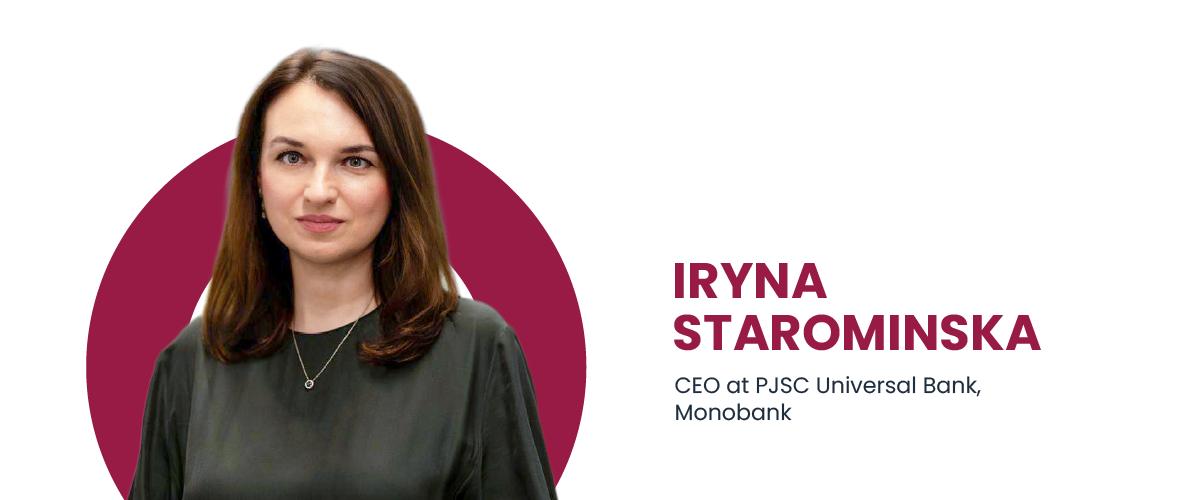
If we talk about what gives me the strength and motivation to continue developing a business during the war, I would honestly say that it’s not really about confidence. It’s more about love for my country and the feeling that this is exactly where I belong.
I chose my profession — banking and finance — many years ago. Most of my ideas and professional ambitions are connected to this field. And Ukraine is the place where I want to realize them. I enjoy working with people here, creating products for them, and solving real problems together. I love Ukraine, and I love Ukrainians. I feel comfortable living and working here.
Of course, war changes life. There are nights when missiles or drones fly over the city. People often say that we’ve already gotten used to it. But that’s not really true. You can never truly get used to war — people simply learn how to live and work despite this reality.
That’s why it’s very important from time to time to step away from the environment of war, even if only for a short period. Many psychologists say that even a short trip abroad once every six months helps people reset and restore their internal balance. I can’t always manage to do that myself, but I understand how important it is.
War also changes the rhythm of life. Often there is almost no time left for meeting friends. But simple things start to gain much more value. For example, spending time with animals. When my dog is nearby, or when my cat comes and sits next to me, there is a very simple and sincere feeling of calm in that.
Another great source of strength is the team. I’ve been working with many people for years, and over time professional relationships often turn into real partnerships and friendships. These are people who love challenges and enjoy building things. When you come to work and see people full of ideas and energy, it’s very inspiring.
And of course it’s very inspiring to see that clients like the product we are creating. When you receive positive feedback and see that people actively use what we build, it gives you a huge amount of energy. And when thousands of new clients join the product every day, that’s probably the best proof that we are moving in the right direction.
It’s also important for me to find time to recharge. Sport helps a lot. Recently we moved to a new office, and there is a gym there. We have group classes, and many colleagues actively attend them. There is tennis, yoga, and stretching. I also train regularly after work, and the fact that everything is in one place saves a lot of time.
I also started taking dance classes. I can’t say I’ve reached a high level yet, but I hope that will change with time.
On weekends I try to maintain my foreign language skills — just to keep them in shape.
But probably the greatest source of strength is belief. Belief in Ukraine and in the people who live here. Our soldiers have been holding the front line for many years. And when you think about what they go through on the front line, you realize that the least we can do in civilian life is to continue working, building, and supporting the country.
I truly believe that Ukraine will come out of this war stronger — economically, technologically, and culturally.
And this belief is what helps us move forward. Because even during war, the future continues to be built. And we are building it together.
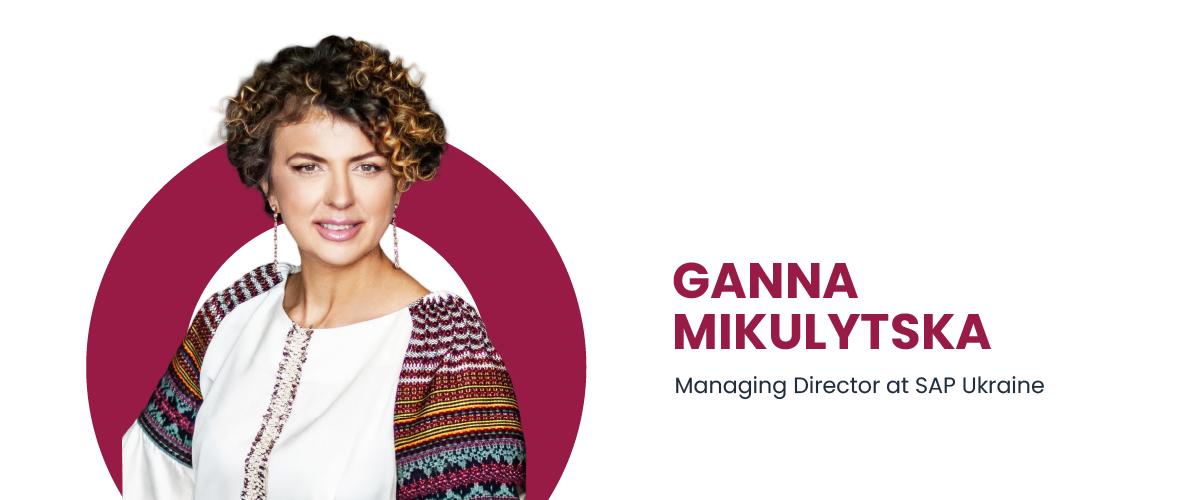
Four years into the full-scale war — what gives you confidence to continue developing your business?
This has been four years of full scale war in our country. Nearly as long as WWI lasted. People and businesses are going through tremendous hardships, especially in this past winter – the harshest winter of Ukraine’s independence, and this war.
It’s the fifth year that we learn to do more with less – on personal and on business sides. My confidence in continuing developing business in Ukraine is in our unique people. With limited resources (of all kinds), running on generators, with unpredictably disrupted supply chains, Ukrainian companies keep embedding AI into their business processes, learning & developing programs are booming engaging ever more employees – activities one could only imagine in peace and abundance times. Most importantly nowadays – our Army and DefenseTech keep setting up the bar very high, on a global scale, for Defense technology.
Ukrainians are unstoppable, peace on Ukrainian terms is inevitable – this alone prompts for business development and assures the country's prosperity, very soon.
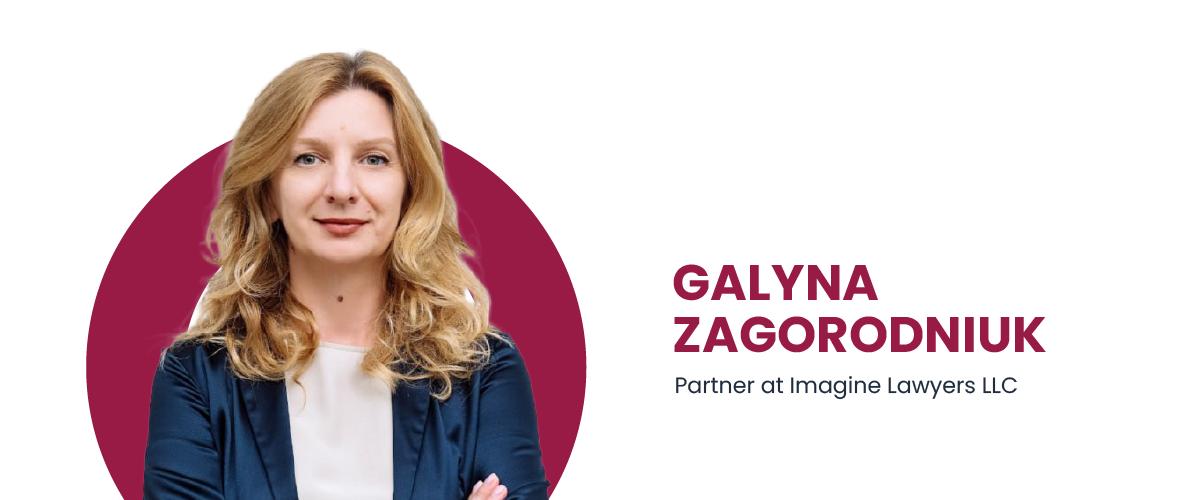
Four years into the full-scale war, I remain in Ukraine and continue to build a business here. My partners and I founded the firm during the war; I also began teaching law students and continue to take an active part in civic initiatives.
What gives me confidence is a sense of the path: even when you pass through darkness, you are still moving upward if you do not betray your principles. This is a marathon, not a sprint as we are running for the long distance.
It is also experience, perhaps the most important and most difficult of my life. Leading, working, teaching and building with care every day is how I move through the war.
Choosing to develop, rather than to pause and hide, is, for me, an act of confidence.
Four voices, four industries,four distinct experiences of the same four years. And yet something runs through all of them that resists easy summarizing.
It is not blind optimism. Everyone here has named the difficulties plainly: broken supply chains, funding gaps, the weight of operating while others are fighting. Confidence, as these leaders describe it, has been earned through the kind of conditions that either break organizations or fundamentally harden them.
What strikes most is the absence of passivity. No one is waiting for the war to end before building the next thing. The future is not a destination these leaders are preserving themselves for. It is something they are actively constructing, right now, under fire.
That may be the most important business insight Ukraine has produced in four years. Not a framework or a methodology, but a demonstrated proof: that meaningful, strategic, long-term work is possible in conditions most business literature has never had to account for. Ukraine is writing that chapter in real time. These are some of the people writing it.