

AI and Boards: Threats or Opportunities
2025-10-07
We’ll hear from Maryna Kvashnina, Anna Mikulytska, and Dmytro Shymkiv on how AI is reshaping leadership, governance, and strategic decision-making at the highest levels.
In 2025, artificial intelligence is no longer a futuristic promise — it is shaping the way organizations are governed and how critical decisions are made.
According to the 2025 AI Index, 78 % of organizations now use AI in at least one function, up from 55 % just a year earlier. Still, only about 25 % of companies have fully implemented formal AI governance programs.
In this environment, the real competitive edge lies in people who know how to interact with AI, not in AI itself. After several waves of hype, most businesses have started shifting from treating AI as a curiosity to making it a critical capability. But its central enabler remains human capital — the ability to frame questions, understand context, and steer outcomes — a fact that no enterprise level can ignore. AI relentlessly challenges the perimeter of all roles, from frontline specialists to executives and supervisory board members.
In the supervisory boardroom, this tension is especially strong. Board members are expected to approve strategic decisions in compressed meetings, relying on data and analysis prepared by management. To act with confidence, they need both transparent, high-quality information and the capacity to rapidly understand complex issues. That’s where AI can begin to play a real role — far beyond converting speech into text or generating meeting summaries.
In the discussion ahead, we will hear from Anna Mikulitska (Managing Director, SAP Ukraine), Maryna Kvashnina (founder of EdenLab and Zviropolis, board member with deep fintech & healthtech experience), and Dmytro Shymkiv (CEO of Delta Strategy & Ventures, investor, and supervisory board member at HELSI and Kyivstar). They will bring perspectives from leadership, governance, technology, and transformation, as we explore the challenges and opportunities AI brings into the highest levels of oversight.

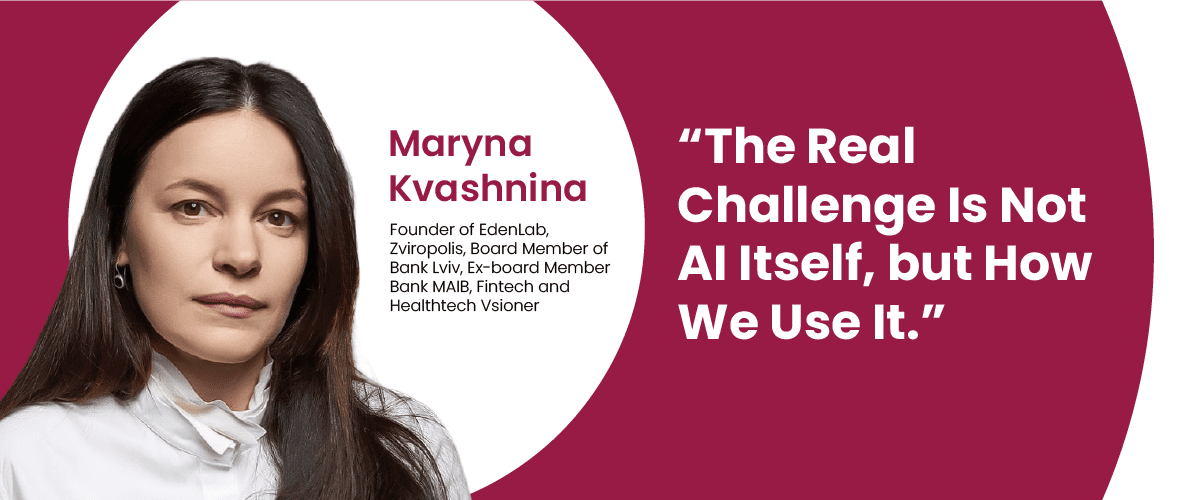
After several waves of hype around AI capabilities, little by little most businesses started to think about how to convert AI from an entertaining commodity into a powerful and performing asset. Surprisingly, the central component of this equation remains the human capital and its ability to interact with technology, while there is no special focus on one of the enterprise levels - AI relentlessly challenges the perimeter of everyone in the organization, from specialists up to owners and supervisory board members.
Being specific, board members need to approve strategic business decisions during short meeting sessions, based on the company and market data, prepared and provided by the management. This composition requires both adequate and transparent business data processing on all levels within the organization, as well as fast and proper understanding of the matter on the level of supervisory board members. And exactly here AI could step on the scene as a contributing partner, far beyond the already trivial speech-to-text processing of boring meeting notes.
To receive the maximum payback, boards and management should be very clear and aligned on having at least one Digital & AI annual target on every level and for most of the functions, as if AI will not perform as expected in fragmented areas of business. Proper use of data and wide application of AI capabilities is the key success factor. Moreover, most corporate AI platforms, like Microsoft Office 365 Copilot, will not work without the organization already being completely in the cloud, which is a pretty heavy infrastructural project itself, including cybersecurity, GDPR and other critical topics on the radar. Thus, any AI-related projects require deep understanding, careful planning and adequate budgeting in order not to be just fancy initiatives, but to be conscious long-term commitments of the business and stakeholders. Proper application of AI as a natural element of the business model will definitely give market advantages and better results.
Across industries — from human and veterinary medicine to fintech, retail, and logistics — the trend is irreversible. The game changer is clear: the effective use of AI, combined with business data analytics, BI tools, and dashboards, consistently improves operational models by driving cost optimization, process efficiency, and practical automation.
For supervisory board members, this makes one thing crucial: to build personal, practical AI skills. This includes:
- continuous learning in AI and data, while supporting learning across the organization
- setting personal AI and data targets, while driving digital transformation
- making data-driven decisions, while demanding transparency, integrity, and literacy within the company
- acting as advocates for AI, while safeguarding the human touch in leadership and culture.
Supervisory boards are not just approving budgets or reacting to technologies — they are shaping the future. Living through the AI era requires already keeping an eye on what comes next, the post-AI world. That mindset will define proper business strategies and long-term competitiveness.
Start thinking Digital & AI now. Lead change. Shape the world.
(No AI was harmed in the preparation of this article.)
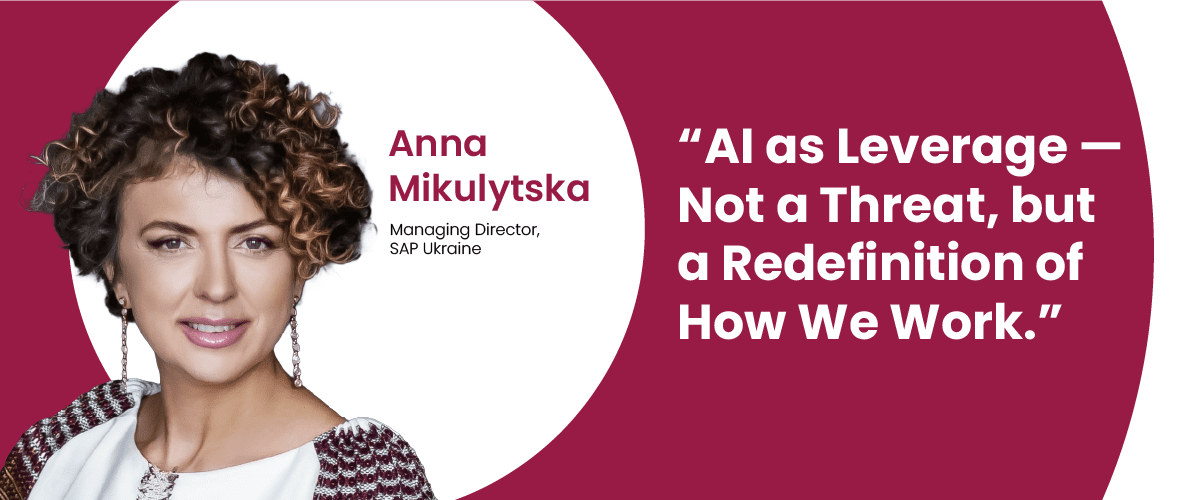
In my opinion, it’s not artificial intelligence itself that poses a threat. The real challenge comes from people who know how to use AI — for those who don’t.
AI has already become an everyday assistant. Take meeting summaries: instead of scrolling through pages of notes, it helps capture the essence of a discussion. Even when someone gives vague or evasive answers on a call, AI can highlight what’s really being said, uncovering the core message.
The same shift is happening in HR. Companies like SAP have already started integrating AI into Human Capital Management. This is not just about automating administrative routines; it’s about reshaping the way organizations understand, support, and develop their people. From identifying skill gaps to personalizing employee learning journeys and improving workforce planning, AI makes HR less about manual processes and more about unlocking human potential.
At the board level, the impact is equally transformative. By processing real-time financial, operational, and market data, AI helps boards detect inefficiencies, anticipate risks, and uncover growth opportunities. It provides deeper insights into business performance, enabling more accurate oversight and allowing directors to focus on strategy rather than routine monitoring. But this power also comes with responsibility: transparency, clear ethical frameworks, and human oversight are essential to ensure that AI complements rather than replaces judgment.
At the end of the day, AI is not here to replace us. It’s a tool that amplifies our ability to see patterns, ask sharper questions, and make better decisions. Those who embrace it and develop the right skills will be the ones shaping the rules of tomorrow.

Artificial Intelligence is no longer a side tool – it’s becoming an integral part of how I work across different roles. As an investor, member of supervisory boards, business leader, developer, and engineer, I see how AI consistently boosts my productivity.
At first, I was using it at maybe 10% of its potential. After engaging with experts and experimenting more, my reliance has grown significantly. From my perspective, AI today is not about replacing people but about accelerating orientation, decision-making, and sharpening focus.
For example:
- Legal review. Instead of asking AI to summarize a contract, I’ll ask: “What risks or unfavorable clauses are there for me?” This reframes the analysis and uncovers what could otherwise stay hidden.
- Financial evaluation. Uploading P&L and balance sheets into AI provides a rough but immediate valuation of a company. It’s not perfect, but it dramatically speeds up the first layer of assessment.
- Role simulation. You can instruct AI to act as a tax inspector, a regulator, or a politician of a certain type, even embedding psychological traits. This creates realistic simulations for negotiation prep, board discussions, or public debates.
- Coaching. AI is a powerful sparring partner. It challenges assumptions, points out mistakes, and helps prepare for high-stakes meetings or exams. In many ways, it acts as a personal business coach.
- Analytics. From comparing service providers to evaluating business strategies, AI offers quick structured insights.
The common thread across all these cases: it’s not about AI replacing people, but about those who master asking the right questions and setting the right context window. These are the individuals who will command the highest value in the market.
AI brings both opportunities and challenges to supervisory boards. But if used wisely, it can shift the entire paradigm of governance, risk assessment, and strategic foresight.
AI is not a finishing line — it’s an invitation to rethink how we govern, lead, and make decisions. For supervisory boards, the promise is real: using AI to detect inefficiencies, anticipate risks, and uncover growth pathways. But promise does not equal outcome. Only boards that embrace transparency, ethical guardrails, and human judgment alongside algorithmic power will unlock sustainable advantage.
The voices of Maryna Kvashnina, Anna Mikulytska, and Dmytro Shymkiv underscore one core idea: the future will be shaped not by technology alone, but by those who master how to wield it. Now is the moment to build AI fluency, align strategy with digital ambition, and lead the shift from reactive governance to proactive oversight.
For today’s supervisory boards, this is not optional — it is essential. The decisions made now will determine whether AI becomes a passing experiment or a foundation stone of long-term success.